
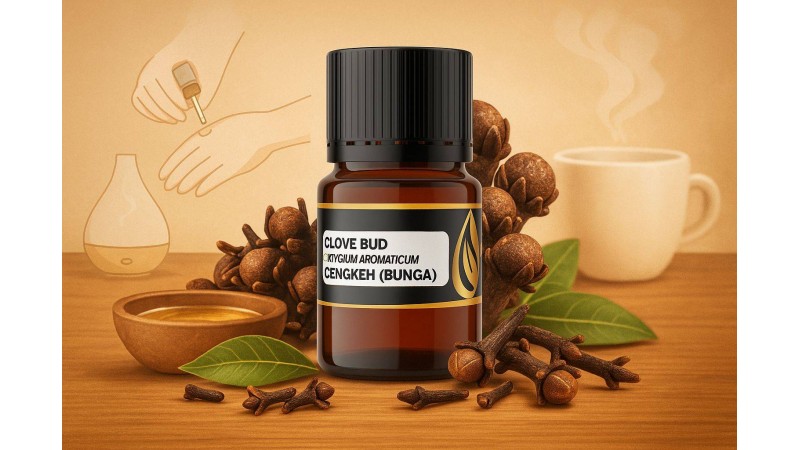

Why Clove Bud Oil Is a Star in Natural Wellness
Syzygium aromaticum — or clove — is one of Indonesia’s most precious spices. Beyond its culinary use, its essential oil is rich in eugenol, a compound known for antiseptic, anti-inflammatory, and analgesic properties.
However, despite its natural origin, Clove Bud Essential Oil is highly concentrated and can be irritating or harmful if misused.
Here are the three most common mistakes users make and expert-approved safety tips so you can enjoy all its benefits without unwanted side effects.
1. Applying Clove Bud Oil Directly on Skin (Without Dilution)
One of the biggest mistakes is using undiluted clove oil directly on the skin.
Eugenol gives the oil its signature warmth — but in high concentration, it can cause redness, burning, or irritation, especially on sensitive skin.
Expert Safety Tip:
-
Always dilute Clove Bud Essential Oil with a carrier oil such as jojoba, sweet almond, or fractionated coconut oil.
-
Safe ratio: 1 drop of Clove Bud Oil per teaspoon (5 mL) of carrier oil (about 1% dilution).
-
Perform a patch test on the inner arm before applying to larger areas.
Note: Professional formulators — such as those at DDistillers PT Syailendra Bumi Investama — use precise concentration standards to ensure both safety and efficacy in their products.
2. Inhaling Directly from the Bottle or Using It Too Strong in Diffusers
Clove oil’s aroma is rich and comforting, but sniffing it directly from the bottle or adding too much to a diffuser can overwhelm your senses, leading to headache, dizziness, or nasal irritation.
Expert Safety Tip:
-
Use an ultrasonic diffuser with water, adding 3–5 drops of Clove Bud Oil per full tank.
-
Limit diffusion to 30 minutes per session to avoid overexposure.
-
For a softer, balanced scent, blend with Sweet Orange, Cinnamon Leaf, or Bergamot Oil.
Did you know? “Spice Serenity,” a blend of Clove Bud Oil and citrus oils, is one of the most popular warm-aroma combinations in global aromatherapy trends.
3. Ingesting Clove Bud Oil Without Professional Guidance
Because it’s natural, some people assume it’s safe to drink — but not all essential oils are suitable for internal use.
Clove Bud Oil, though food-related, can be toxic when ingested in large or undiluted amounts due to its high eugenol content.
Expert Safety Tip:
-
Never ingest essential oils without advice from a certified aromatherapist or medical professional.
-
For oral-care uses (like natural mouthwash), only use food-grade Clove Bud Oil and in micro-doses (1 drop per 100 mL water).
-
Choose trusted brands like DDistillers, which produce export-quality, high-purity Clove Bud Essential Oil for professional use.
Bonus: General Safety Tips for Using Clove Bud Essential Oil
-
Store in amber glass bottles away from sunlight.
-
Keep out of reach of children and avoid use on babies or pregnant women without expert supervision.
-
Never apply near eyes, open wounds, or mucous membranes.
-
Use pipettes or droppers to prevent overuse.
Conclusion: Power Comes with Precision
Clove Bud Essential Oil is a powerful botanical extract — incredibly beneficial when used correctly, but potentially irritating when misused.
Understanding proper dilution, application, and storage allows you to harness its full natural power safely.
As a trusted producer of 100% Pure Clove Bud Essential Oil, DDistillers PT Syailendra Bumi Investama emphasizes the importance of purity, education, and safety in essential oil usage.
Because behind every drop of essential oil, there’s science, precision, and responsibility.


Leave Your Comment