
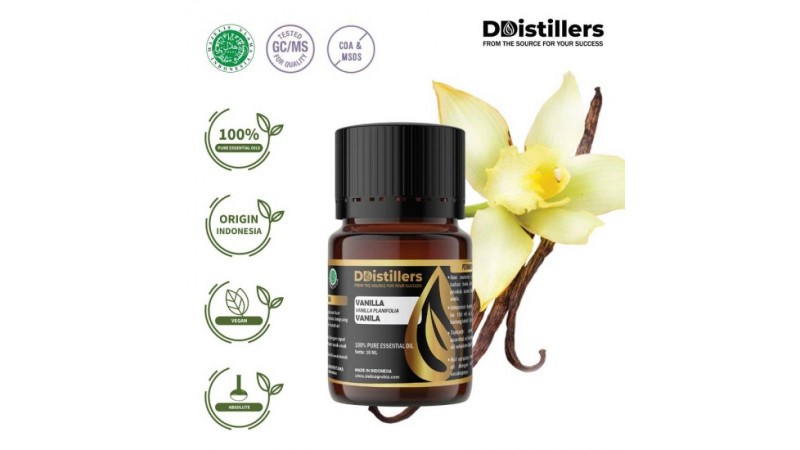

Vanilla, an exotic spice with a captivating sweet aroma, has long captivated culinary enthusiasts and perfume lovers worldwide. Its distinctive fragrance originates from aromatic compounds found within fermented vanilla beans. However, obtaining high-quality, concentrated vanilla essential oil requires a complex and meticulous extraction process.
This article thoroughly explores the extraction process of vanilla essential oil, from selecting raw materials to the final marketable product.
Understanding the Vanilla Plant and its Composition
Vanilla (Vanilla planifolia) is a climbing orchid belonging to the Orchidaceae family, native to Mexico. Vanilla beans, the fruit of the vanilla plant, only develop their characteristic aroma after undergoing a complex fermentation process. This fermentation triggers enzymatic reactions that transform aroma precursors into aromatic compounds responsible for vanilla's unique fragrance.
Vanilla essential oil is a complex mixture of hundreds of chemical compounds, with vanillin being the primary component responsible for its characteristic aroma. Other compounds, including alcohols, esters, aldehydes, and ketones, contribute to the complex and unique aroma profile of each vanilla type. This chemical composition varies depending on factors such as plant variety, climatic conditions, and processing methods.
Stages of Vanilla Essential Oil Extraction
Extracting vanilla essential oil is a sophisticated process requiring specialized expertise. Several extraction methods exist, but solvent extraction is the most common and yields the highest quality oil. The process involves the following stages:
1. Raw Material Preparation
- Vanilla Bean Selection: High-quality vanilla beans must be carefully selected. Good beans are dark in color, have a soft texture, and a strong aroma. Damaged, moldy, or low-aroma beans are discarded.
- Washing and Drying: Vanilla beans are thoroughly washed to remove dirt and soil residue. They are then carefully dried to prevent mold and bacterial growth. Drying can be done naturally under sunlight or using specialized drying equipment.
- Grinding (Optional): Some extraction methods require grinding the vanilla beans into a fine powder to enhance extraction efficiency.
2. Solvent Extraction
Solvent extraction is the most common method for producing high-quality vanilla essential oil. Ethanol is a frequently used solvent due to its ability to effectively dissolve vanilla aromatic compounds and its relative safety. The steps are as follows:
- Maceration: Vanilla beans (or powder) are soaked in ethanol for several days or weeks. The maceration time depends on the bean quality and the desired essential oil concentration. During maceration, aromatic compounds dissolve into the ethanol.
- Filtration: After maceration, the ethanol-vanilla extract mixture is filtered to separate solids from the solution. Filtration is done using filter paper or other filtration equipment.
- Evaporation: The ethanol containing the dissolved aromatic compounds is then evaporated using a vacuum evaporator. Vacuum evaporation is performed at low temperatures to prevent the degradation of heat-sensitive aromatic compounds. The result is concentrated vanilla essential oil.
3. Purification and Storage
The vanilla essential oil obtained from the extraction process may still contain minor impurities or unwanted substances. Therefore, purification is often necessary to improve the oil's quality and purity. Purification can be done using various methods, such as fractional distillation or chromatography.
After purification, vanilla essential oil is stored in airtight containers, protected from direct sunlight to prevent oxidation and degradation of aromatic compounds. The ideal storage temperature is a cool, dry room temperature.
Other Extraction Methods
Besides solvent extraction, other extraction methods can be used, although they are less common and may yield lower quality:
- Supercritical CO2 Extraction: This method uses supercritical carbon dioxide as a solvent. It's considered more environmentally friendly as it avoids organic solvents, but requires more advanced and expensive equipment.
- Steam Distillation: This involves vaporizing aromatic compounds with steam. It's simpler and cheaper but yields a lower essential oil concentration.
- Extraction Using Other Solvents: Besides ethanol, other solvents like propylene glycol can be used, but the safety and purity of the final product must be carefully considered.
Factors Affecting the Quality of Vanilla Essential Oil
The quality of vanilla essential oil is influenced by several factors:
- Vanilla Variety: Different vanilla varieties have distinct aroma profiles.
- Climatic Conditions: The right climate is crucial for the growth and development of vanilla plants, ultimately affecting the quality of the beans and their essential oil.
- Fermentation Process: Proper fermentation is essential for developing the vanilla aroma.
- Extraction Method: The appropriate extraction method will yield essential oil with optimal quality and yield.
- Purification Process: Good purification results in purer, higher-quality essential oil.
- Storage: Proper storage maintains quality and prevents essential oil degradation.
Applications of Vanilla Essential Oil
Vanilla essential oil has various applications, including:
- Perfume and Cosmetic Industry: Vanilla essential oil is used as a raw material in perfumes, lotions, and other cosmetic products.
- Food and Beverage Industry: Vanilla essential oil is used to enhance the aroma and flavor of various food and beverage products, such as ice cream, cakes, and drinks.
- Aromatherapy: The calming aroma of vanilla can be used in aromatherapy to reduce stress and promote relaxation.
- Traditional Medicine: In some cultures, vanilla plays a role in traditional medicine.
Conclusion
Vanilla essential oil extraction is a complex process requiring specialized skills. It begins with selecting high-quality vanilla beans and culminates in the purification and storage of the resulting essential oil. The quality of vanilla essential oil is influenced by various factors, including vanilla variety, climatic conditions, fermentation process, and extraction method. Vanilla essential oil has diverse applications in the perfume, cosmetic, food, beverage, and aromatherapy industries.


Leave Your Comment