
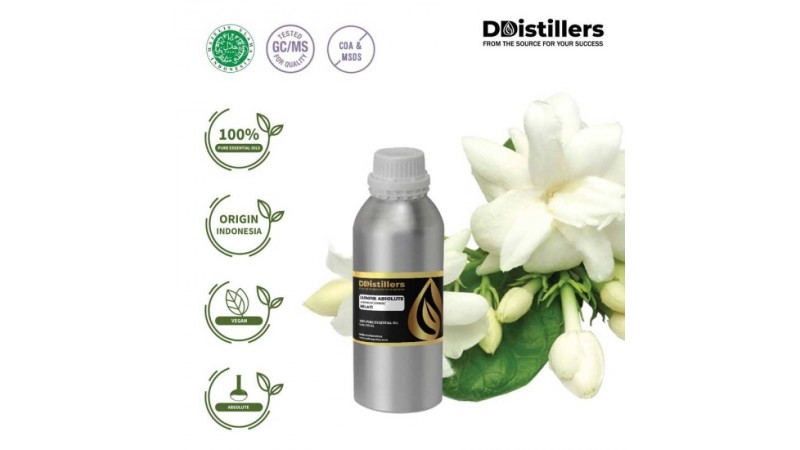

Jasmine Absolute oil is one of the most precious and beloved essential oils worldwide, renowned for its rich, sweet, and captivating floral aroma. Extracted from jasmine flowers, specifically from species such as Jasminum sambac and Jasminum grandiflorum, this oil is highly valued in the perfume and cosmetic industries. Indonesia, with its rich botanical diversity and cultural heritage, has a longstanding relationship with jasmine flowers. Over time, the production and use of Jasmine Absolute oil in Indonesia have evolved considerably, reflecting both traditional cultural significance and modern industrial development.
This article explores the history of Jasmine Absolute oil in Indonesia, its production processes, and its growth within the country’s economy and global marketplace. We will also examine the challenges and opportunities faced by the industry today.
Historical Background of Jasmine in Indonesia
Cultural Significance of Jasmine
Jasmine flowers have been integral to Indonesian culture for centuries. Known locally as melati, jasmine holds a symbolic place in religious ceremonies, weddings, and traditional celebrations as a representation of purity, beauty, and spirituality. It is also Indonesia’s national flower, reflecting its importance to the nation’s identity.
Historically, jasmine flowers were used in garlands, offerings, and as fragrant adornments. While the flowers have been cherished primarily for their scent and symbolic value, the extraction and use of jasmine oil as a commercial product developed much later.
Introduction of Jasmine Absolute Oil Production
The commercial production of Jasmine Absolute oil in Indonesia began to gain traction during the late 19th and early 20th centuries, coinciding with the global expansion of the perfume and essential oils industry. At that time, advanced extraction methods such as solvent extraction were introduced, enabling producers to obtain high-quality jasmine oil.
Initially, much of the Jasmine Absolute oil used in Indonesia was imported from established producers in India, Tunisia, and France. However, Indonesia’s favorable tropical climate and abundant jasmine cultivation soon made it an ideal location for developing its own production capabilities.
Jasmine Cultivation and Harvesting in Indonesia
Ideal Growing Conditions
Indonesia’s tropical climate, with its warm temperatures and high humidity, provides optimal conditions for jasmine cultivation. Key cultivation areas include West Java, Bali, and parts of Sumatra, where jasmine plants thrive and produce fragrant blossoms year-round.
Farmers typically cultivate Jasminum sambac, known locally as melati putih, prized for its intense and sweet fragrance, which is ideal for producing Jasmine Absolute oil.
Harvesting Practices
Harvesting jasmine flowers is a delicate process, as the flowers emit their strongest fragrance during the early morning hours. Farmers handpick the blooms at dawn to capture the maximum aromatic potential, which is crucial for producing high-quality oil.
Due to the fragile nature of jasmine flowers and their low oil content, large quantities of flowers are required to produce a small amount of Jasmine Absolute oil, making it a labor-intensive and valuable commodity.
Extraction Methods for Jasmine Absolute Oil
Solvent Extraction
Jasmine Absolute oil is primarily obtained through solvent extraction rather than steam distillation. Steam distillation can degrade the delicate floral compounds, while solvent extraction preserves the full aromatic profile.
During solvent extraction, jasmine flowers are immersed in a solvent that dissolves the fragrant compounds, producing a waxy substance known as “concrete.” This concrete is then treated with alcohol to separate the pure aromatic oil, called “absolute.”
Advances in Extraction Technology
In recent years, some Indonesian producers have begun adopting advanced techniques such as supercritical fluid extraction (SCFE) using CO2. This method is environmentally friendly and yields high-purity oils without solvent residues. The use of SCFE technology represents a significant step toward enhancing product quality and meeting international standards.
Development of the Jasmine Absolute Oil Industry in Indonesia
Growth of the Perfume and Cosmetics Sector
Indonesia’s perfume and cosmetics industries have increasingly incorporated Jasmine Absolute oil as a key ingredient. Local manufacturers produce a wide range of jasmine-based products, including perfumes, skincare, soaps, and aromatherapy oils.
The rising popularity of natural and organic products within Indonesia has further stimulated demand for Jasmine Absolute oil. Consumers appreciate the oil’s natural origin, therapeutic benefits, and luxurious scent.
Domestic Market Expansion
Within Indonesia, Jasmine Absolute oil has become a sought-after ingredient for both traditional and modern applications.
Export Potential and International Market Presence
Indonesia has been gradually positioning itself as a player in the global market for Jasmine Absolute oil. While countries like India, Tunisia, and France dominate the international supply, Indonesia’s rich biodiversity and skilled workforce provide a promising foundation for growth.
Efforts to improve the quality of Indonesian Jasmine Absolute oil through better cultivation practices, modern extraction technologies, and adherence to international standards have increased the competitiveness of Indonesian products abroad. Export markets include countries in Asia, Europe, and North America, where the demand for high-quality natural essential oils continues to grow.
Challenges Facing the Industry
Despite its potential, the Jasmine Absolute oil industry in Indonesia faces several challenges:
-
Raw Material Supply: Jasmine flowers have relatively low oil yield, and large quantities are required to produce small amounts of oil. This means consistent flower cultivation and harvest are critical but sometimes unstable due to weather, pests, or farming methods.
-
Technological Barriers: Advanced extraction technologies such as supercritical fluid extraction require significant investment, which can be a barrier for small and medium enterprises.
-
Quality Control and Certification: Meeting international quality standards and acquiring certifications like ISO, organic, or fair trade is essential but often complicated and costly.
-
Market Competition: Established producers with long-standing reputations pose tough competition for Indonesian producers, who must continuously innovate and improve to gain market share.
Opportunities for Growth
-
Rising Global Demand for Natural Products: Consumers worldwide are increasingly favoring natural, sustainable, and ethically sourced products—trends that align well with Jasmine Absolute oil production in Indonesia.
-
Government and Private Sector Support: Initiatives to support agribusiness, improve supply chains, and promote exports can bolster the industry’s growth.
-
Research and Development: Collaborations between universities, research centers, and industry players can improve cultivation techniques, pest control, and extraction methods, enhancing yield and quality.
-
Product Diversification: Beyond pure Jasmine Absolute oil, Indonesia can explore producing value-added products such as blended perfumes, skincare lines, and aromatherapy formulations to increase market reach and profitability.
Conclusion
The history and development of Jasmine Absolute oil in Indonesia reflect a rich cultural heritage combined with modern industrial progress. From its traditional role as a revered flower in Indonesian society to its emergence as a valuable commodity in the essential oils industry, Jasmine Absolute oil holds significant promise.
While challenges remain, ongoing advancements in cultivation, extraction technology, and market development provide a solid foundation for Indonesia to enhance its presence in the global Jasmine Absolute oil market. With strategic investment, quality focus, and innovation, Indonesia can continue to grow this sector, benefiting both the economy and preserving an important cultural legacy.


Leave Your Comment