
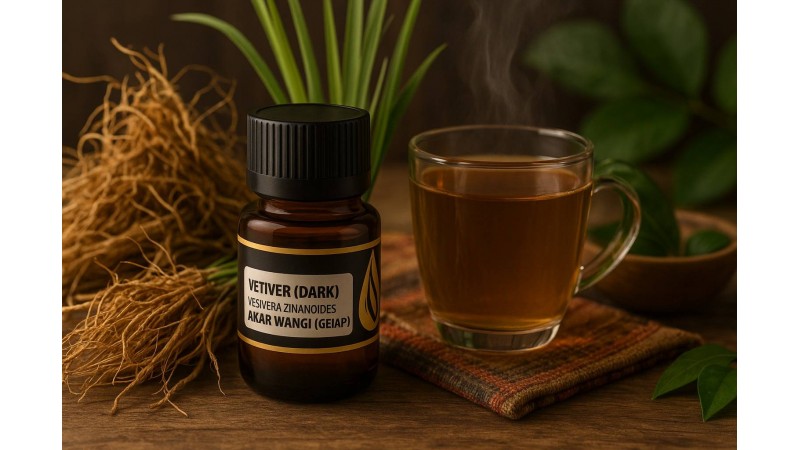

Vetiver (Chrysopogon zizanioides), commonly known as khus or aromatic root, is a plant with a long history of use in traditional medicine across Asia, including India, Indonesia, and China. Extracted from its deep and fibrous roots, vetiver essential oil is often referred to as the “oil of tranquility” due to its calming effects on both body and mind.
Traditionally, vetiver has been used not only for aromatherapy and perfumery but also as a natural remedy for fever, headaches, and nervous disorders. In this article, we will explore the active compounds of vetiver, its role in traditional healing practices, and its relevance to modern wellness.
Active Compounds in Vetiver
The therapeutic benefits of vetiver are closely linked to the unique chemical composition of its essential oil. Some key compounds include:
-
Khusimol → provides anti-inflammatory and calming effects.
-
Vetiverol and Isovalencenol → natural relaxants for the nervous system.
-
α-Vetivone and β-Vetivone → mood stabilizers that support better sleep quality.
-
β-Vetivenene → contributes to the earthy-woody aroma that soothes stress and tension.
This unique profile explains why vetiver has been highly valued in traditional herbal medicine for centuries.
1. Vetiver for Fever Relief
In traditional medicine, vetiver roots are often boiled to prepare herbal water believed to help reduce body heat and fever.
-
Traditional usage: Dried vetiver roots are boiled in water and consumed as a cooling drink or used as a compress.
-
Benefits:
-
Provides a natural cooling effect on the body.
-
Helps reduce internal heat and inflammation.
-
Maintains hydration while refreshing the system.
-
Modern research suggests that this effect may be linked to vetiver’s anti-inflammatory and diuretic properties, which support body temperature regulation.
2. Vetiver for Headache Relief
Vetiver’s calming aroma has been traditionally used to alleviate headaches, particularly those caused by stress or fatigue.
-
Traditional usage:
-
Vetiver essential oil diluted with carrier oil is applied to the temples or back of the neck.
-
Ground vetiver roots are mixed with coconut oil and used as a cooling compress.
-
-
Benefits:
-
Relieves muscle tension in the head and neck.
-
Provides soothing earthy-woody aroma that calms the nervous system.
-
Effective against stress-induced or tension headaches.
-
In modern aromatherapy, vetiver essential oil is frequently used in diffusers as a natural remedy for tension headaches.
3. Vetiver for Nervous Disorders
Among its most celebrated traditional uses, vetiver is considered highly effective for nervous system imbalances.
-
Traditional usage:
-
Vetiver roots infused in water are consumed as a natural calming beverage.
-
Vetiver oil is applied during traditional massages to reduce anxiety and restlessness.
-
-
Benefits:
-
Reduces anxiety, panic attacks, and irritability.
-
Improves sleep quality in individuals suffering from insomnia.
-
Calms hyperactive nervous responses, promoting emotional stability.
-
Modern studies highlight vetiver’s potential as a natural anxiolytic and even suggest benefits for individuals with ADHD due to its grounding and stabilizing effects.
Relevance in Modern Wellness
While traditional uses may have been based on empirical knowledge, modern science is increasingly supporting vetiver’s therapeutic potential. Research indicates that vetiver essential oil may function as:
-
Natural anti-inflammatory → supports fever management.
-
Mild sedative → improves relaxation and sleep quality.
-
Neuroprotective agent → helps protect nerve cells from oxidative stress.
Thus, the traditional applications of vetiver in addressing fever, headaches, and nervous disorders align well with emerging scientific evidence.
Safe Usage of Vetiver
Although vetiver is generally safe, proper usage is essential:
-
Topical use: Always dilute vetiver essential oil with a carrier oil before applying it to the skin.
-
Internal use: Only consume vetiver root infusions as practiced traditionally, and avoid excessive intake.
-
Aromatherapy: Use a diffuser with a few drops of vetiver oil for stress and headache relief.
Consulting with a healthcare professional or herbalist is recommended for prolonged or therapeutic use.
Conclusion
Vetiver is far more than a fragrance ingredient—it holds a rich heritage in traditional medicine. For centuries, communities have relied on its cooling and calming properties to treat fever, headaches, and nervous disorders. Today, modern research continues to validate these traditional practices, highlighting vetiver’s value as both a natural remedy and a holistic wellness tool.
By bridging traditional wisdom with modern science, vetiver stands as a symbol of how nature provides timeless solutions for human health.
David, A., Fărcaș, A., & Socaci, S. A. (2023). An overview of the chemical composition and bioactivities of Vetiveria zizanioides (L.) Nash essential oil. Trends in Food Science & Technology, 140, 104153. https://doi.org/10.1016/j.tifs.2023.104153


Leave Your Comment