
1LSS-500x500.png)
A.
Aromatherapy and Psychological Applications
- Aromatherapy
for relaxation and emotional well-being
Cananga odorata oil is widely used in aromatherapy to support mental relaxation, reduce stress, and create a calming atmosphere due to its floral and soothing aroma. Traditional and scientific studies indicate calming effects on the nervous system and reduced anxiety levels. - Support
for mood and mild depression
Pre-experimental research reports that aromatherapy with cananga oil administered to elderly individuals for seven days significantly reduced depression levels, potentially due to compounds such as linalool, geraniol, and eugenol interacting with the brain’s limbic system.
B.
Consumer Product Applications
- Perfumery
and cosmetics industry
Cananga oil is a high-value fragrance ingredient in perfumes and cosmetic products due to its distinctive neutral-to-sweet floral aroma. - Household
and aromatic products
The oil is used in aromatherapy candles, diffusers, and other scented products to enhance aesthetic value and sensory experience.
C.
Functional Formulation Applications
- Insect
repellent and natural pest control
The oil exhibits repellent properties against Aedes aegypti mosquitoes and potentially other insects such as household pests and storage insects. Various studies demonstrate significant repellent activity depending on product concentration. - Repellent
formulations in gels, candles, and lotions
Formulation research indicates that cananga oil can be incorporated into aromatherapy gels or lotions to enhance mosquito repellent effectiveness.
D.
Antioxidant and Other Biochemical Activities
- Antioxidant
and antibacterial potential (scientific support)
Chemical studies of cananga oil report free radical scavenging capacity of its active components, as well as antibacterial activity against certain bacteria, indicating potential for dermatological formulations and skin health support.
Formulation
1 – Relaxation Aromatherapy Oil (Topical)
Purpose:
Relaxation, mild stress management, and emotional balance
Scientific basis: Topical use of Cananga odorata essential oil at
low–moderate concentrations is considered safe and effective in relaxation
aromatherapy (pharmacological & aromatherapy reviews).
A.
Ingredients (Personal Scale – 30 mL)
- Cananga
(Garden) Essential Oil: 0.6 mL (2%)
- Carrier
oil (Sweet Almond / Jojoba): 29.4 mL (98%)
- A
concentration of 1–3% is recommended for topical aromatherapy use in healthy
adults.
B.
Preparation Method
- Prepare
a clean and dry dark glass (amber) bottle.
- Add the carrier oil according to the required volume.
- Add Cananga essential oil.
- Close the bottle and homogenize gently by slow rolling (do not shake
vigorously).
- Allow to rest for 24 hours before use to allow aroma stabilization.
C.
Directions for Use
- Apply
3–5 drops to the wrists, back of the neck, or shoulders.
- Use 1–2 times daily as needed.
D.
Safety & Testing
- Patch
test: apply 1 drop to the inner elbow and observe for 24 hours.
- Not recommended for children under 12 years without dose adjustment.
- Avoid eye and mucosal areas.
Formulation
2 – Emotional Balancing Diffuser Blend
Purpose:
Calming the mind and reducing mild anxiety
Scientific basis: Inhalation of Cananga odorata affects the
limbic system and stress response.
A.
Ingredients (Personal Scale)
- Cananga
(Garden) Essential Oil: 3 drops
- Lavender
Essential Oil: 2 drops
- Diffuser
water: according to device capacity
B.
Directions for Use
- Operate
the diffuser for 15–30 minutes.
- Use 1–2 times daily.
C.
Safety
- Ensure
good room ventilation.
- Do not use continuously for more than 1 hour.
Formulation
3 – Aromatherapy Mosquito Repellent Lotion
Purpose:
Natural-based mosquito repellent
Scientific basis: Cananga odorata oil has demonstrated repellent
activity against Aedes aegypti at specific concentrations.
A.
Ingredients (SME / Pilot Batch Scale – 1,000 g)
- Cananga
(Garden) Essential Oil: 50 g (5%)
- Emulsifying
wax: 70 g
- Carrier
oil (Coconut / MCT / Sunflower): 150 g
- Purified
water (Demineralized water): 720 g
- Food-grade
cosmetic preservative (optional, according to regulations): q.s.
B.
Manufacturing Method (Cosmetic Industry)
- Oil
phase: heat carrier oil and emulsifying wax to 70–75°C.
- Water phase: heat water to the same temperature.
- Add the water phase to the oil phase while homogenizing.
- Cool to below 40°C, then add Cananga essential oil.
- Mix until homogeneous, then proceed with filling.
C.
Directions for Use
- Apply
a thin layer to exposed skin areas (arms, legs).
- Reapply every 3–4 hours if necessary.
D.
Safety & Testing
- Physical
stability testing (4–8 weeks at room and elevated temperatures).
- Microbiological testing (mandatory for lotion products).
- Skin irritation testing (limited panel patch test).
Formulation
4 – Natural Perfume Oil Serum
Purpose:
Natural oil-based fragrance
Scientific basis: Cananga is commonly used as a middle–base note in
natural perfumery.
A.
Ingredients (Personal Scale – 10 mL)
- Cananga
(Garden) Essential Oil: 0.8 mL (8%)
- Jojoba
oil: 9.2 mL (92%)
B.
Preparation Method
- Combine
ingredients in a glass roll-on bottle.
- Homogenize and allow aroma maturation for at least 7 days.
C.
Directions for Use
Apply
to pulse points.
D.
Safety
Maximum
perfume oil concentration for skin use: 10%.
General
Safety & Scientific Notes
- Cananga
essential oil is highly concentrated → dilution is mandatory.
Not recommended for: - Pregnant
women in early trimester
- Infants
and toddlers
- Store
in dark glass bottles at temperatures below 30°C.
- All
industrial formulations must comply with:
- Good Manufacturing Practice (GMP)
- Local
cosmetic regulations (BPOM / ASEAN Cosmetic Directive)
- In
Silico Study of Bioactive Compounds from Cananga odorata Essential Oil
Against ACE2 and TMPRSS2
- Formulasi
dan Evaluasi Sediaan Aromaterapi Berbasis Minyak Atsiri Kenanga (Cananga
odorata)
- Formulasi
Lilin Aromaterapi Menggunakan Minyak Atsiri Kenanga dan Kulit Jeruk Manis
- Chemical
Composition and Antibacterial Activity of Cananga odorata Essential Oil
- Analisis
Fitokimia dan Aktivitas Biologis Tanaman Kenanga (Cananga odorata)
- Kualitas,
Komposisi Kimia, dan Aktivitas Antioksidan Minyak Atsiri Bunga Kenanga
- A
Review on Cananga odorata: Phytochemistry, Traditional Uses, and
Biological Activities
- Antibacterial
Activity of Cananga odorata Essential Oil Against Staphylococcus
aureus and Candida albicans
- Chemical
Constituents and Biological Activities of Ylang-Ylang (Cananga odorata)
Essential Oil
- Traditional
Uses, Phytochemistry, and Biological Activities of Cananga odorata
- Efficacy
of Cananga odorata Essential Oil Against Mosquito Vectors
- Kenanga
(Cananga odorata): Informasi Botani dan Morfologi Tanaman
- Antibacterial
Activities of Perfume Containing Cananga odorata Essential Oil
- Ekstraksi
dan Karakterisasi Minyak Atsiri Bunga Kenanga serta Aplikasinya sebagai Repelan
Nyamuk
- Chemical
Composition, Antioxidant, and Antibacterial Properties of Ylang-Ylang Essential
Oil
- Improving
the Quality and Bioactivity of Ylang-Ylang (Cananga odorata) Essential
Oil
- Effect
of Flower Type and Harvest Time on Physicochemical Properties and Antibacterial
Activity of Cananga odorata Essential Oil
- Antibacterial
and Insect-Repellent Activities of Cananga odorata Essential Oil
- Chemical
Composition and Biological Activities of Cananga odorata Essential Oil
Analyzed by GC-MS
- The
Anxiolytic Effects of Cananga odorata Essential Oil in Aromatherapy
Applications
- Application of Ylang-Ylang Essential Oil in Biodegradable Active Packaging Films
- Kenanga
(Cananga odorata): Deskripsi Tanaman dan Manfaat Lingkungan
A.
Psychological and Nervous System Effects
- Anxiolytic
effects
Randomized clinical trials (RCTs) involving patients prior to medical procedures demonstrate that aromatherapy with Cananga odorata oil can reduce anxiety scores and salivary enzyme activity associated with stress, indicating meaningful anxiolytic effects. - Relaxation
and blood pressure
Several field studies and reports suggest that inhalation of cananga oil may exert mild sedative effects, including reduced heart rate and harmonization of blood pressure, consistent with literature describing the calming properties of this oil.
B.
Antimicrobial and Skin-Related Activities
- Antibacterial
and antioxidant activity
Cananga oil has demonstrated inhibitory effects against the growth of several pathogenic bacteria (e.g., Staphylococcus aureus, E. coli) through mechanisms involving disruption of microbial cell membranes and inhibition of biofilm formation. - Potential
dermatological applications
Modern scientific evaluations suggest that oils containing linalool, geraniol, and benzyl acetate possess antimicrobial and antioxidant activities relevant to the development of topical dermatological applications.
C.
Analgesic and Anti-Inflammatory Activity
- Potential
analgesic and anti-inflammatory effects
Scientific review articles report that cananga oil and its extracts exhibit pain-reducing and anti-inflammatory effects (e.g., COX-2 reduction) in in vivo and clinical research models, although further studies are required for full clinical validation.
D.
Repellent and Insecticidal Activity
- Natural
preventive benefits against disease vectors
The repellent activity of cananga oil against disease-vector mosquitoes such as Aedes aegypti and other species suggests its potential use as a plant-based preventive tool against insect bites.
Important
Note
Although
numerous scientific studies demonstrate a variety of in vitro activities,
evidence in humans for certain therapeutic benefits still requires further
large-scale clinical research. Interpretation of therapeutic benefits for
medical conditions should be approached with caution and should not replace
professional medical treatment.
- Cananga
(Garden) Essential Oil is not a medicine and is not intended to diagnose,
treat, cure, or prevent any disease.
- This information is provided for educational and aromatherapy purposes only and
does not constitute medical advice.
- Therapeutic use has not been clinically tested in humans.
Halal
Certificate: 33110034666001125
Export
Documentation Available
- Certificate of Analysis (COA)
- Material Safety Data Sheet
(MSDS)
- Phytosanitary Certificate
- Halal Certificate
- CITES permit (required for
international trade)
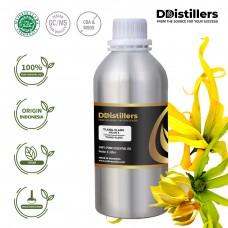
CANANGA
GARDEN ESSENTIAL OIL / MINYAK ATSIRI KENANGA TUMPUK By DDISTILLERS
Brand:
DDistillers
INCI Name: Cananga Odorata Flower Oil
Product Category: Single Essential Oil, Purity: 100%
HS Code: 33012990
CAS No.: 8006-81-3
FEMA No.: 3119
Extraction
Method: Steam distillation
PRODUCT
DESCRIPTION
Cananga
(Garden) Essential Oil is a high-quality aromatic essential oil obtained from
the fresh flowers of Cananga odorata forma fruticosa through
steam distillation. Steam distillation is a standard industrial method for
extracting volatile compounds from flowers without degrading their chemical
constituents, thereby producing an oil that faithfully reflects the plant’s
original aromatic character. This oil is traditionally and scientifically
recognized as part of the tropical floral essential oil group, known for its
complex floral aroma, and has been extensively studied in aromatherapy
literature and essential oil chemistry.
Physically,
this oil typically appears as a clear liquid ranging from pale yellow to deep
yellow. Color variations may be influenced by distillation techniques, flower
harvesting conditions, and distillation duration; however, the color range
generally remains consistent with other tropical floral essential oils. Oils
distilled from fresh flowers often exhibit higher aromatic intensity compared
to those derived from wilted or dried flowers prior to distillation.
From
an organoleptic (sensory) perspective, Cananga (Garden) Essential Oil possesses
a deep, sweet, and exotic floral aroma, often described as a rich floral
bouquet with subtle fruity and fresh green undertones. This distinctive aroma
is widely valued in the perfumery and aromatherapy industries due to its
complexity and strong sensory appeal. The primary volatile components
responsible for this aromatic profile include compounds such as benzyl acetate,
linalool, geranyl acetate, along with various sesquiterpenes and esters that
provide a balance of sweetness, floral notes, and mild herbaceous nuances.
Chemically,
analysis of Cananga essential oil using gas chromatography–mass spectrometry
(GC–MS) has identified several major organic components that define both the
organoleptic and functional properties of the oil. Significant constituents
include linalool (~15%), benzyl acetate (~18%), benzyl benzoate (~11%), geranyl
acetate (~9%), as well as other aromatic compounds such as methyl benzoate and
p-methyl anisole. These components act synergistically to produce a complex
aroma, where linalool contributes fresh floral notes, benzyl acetate imparts
pronounced sweetness, and other esters and sesquiterpenes add depth and
aromatic stability.
From
a functional specification standpoint, this oil has been scientifically
evaluated for its physicochemical properties, such as refractive index, density
(specific gravity), and chemical composition, which are consistent with
standards for tropical floral essential oils. Certain studies report density
and refractive index values that align with accepted essential oil quality
standards, meeting criteria commonly referenced in scientific publications and
the fragrance industry.
BOTANICAL
AND MORPHOLOGICAL DESCRIPTION
Cananga
odorata is a flowering plant species belonging to the
Annonaceae family, and in the forma fruticosa variation, it is commonly
known as shrub ylang-ylang or garden cananga. Taxonomically, this variant
belongs to the same species as Cananga odorata but differs
morphologically in size and growth habit, and is therefore often cultivated as
an ornamental shrub in tropical gardens.
General
Botanical and Morphological Overview
Cananga
odorata is an angiosperm (flowering plant) classified as a
tropical woody plant. In the forma fruticosa variant, the plant grows as
a compact shrub, generally shorter than the tall tree form of C. odorata,
which can reach several tens of meters in height. This shrub form often grows
densely and forms an ideal structure for tropical landscaping.
The
plant exhibits characteristic adaptations to humid tropical climates, including
lush foliage, highly aromatic flowers, and vegetative structures that maximize
photosynthesis under full or partial sunlight. Both vegetative organs (leaves,
stems, roots) and reproductive organs (flowers and fruits) display traits
typical of the Annonaceae family, such as simple leaves and flowers with six
pendulous petals.
Plant
Morphology
1.
Growth Habit
Cananga odorata f. fruticosa grows as a small to medium-sized
shrub, in contrast to the tall tree form commonly known. In horticultural
practice, this shrub is often pruned to control height.
2.
Stem and Root System
The stems are woody, with a texture ranging from smooth to slightly rough as
the plant matures. Stem color varies from light green in young stems to grayish
tones in older stems. The root system penetrates the soil to obtain stable
water and nutrient supplies.
3.
Leaves
- Leaf
type: Simple leaves, dark green and glossy
- Arrangement:
Alternate along the stem
- Shape:
Oblong-elliptic to ovate-oblong with an acuminate apex and a cuneate base
- Size:
Approximately 10–21 cm in length and 4–10 cm in width in tree forms; leaves in
the forma fruticosa are generally slightly smaller
- Surface:
Slightly pubescent, particularly along the main veins, with clearly visible
venation
- Function:
The large leaf surface enhances light absorption in tropical habitats and
facilitates gas exchange
4.
Flowers
- Flowering
season: Throughout the year under favorable environmental conditions
- Structure:
Flowers occur in axillary racemes, consisting of three sepals and six petals
arranged in two whorls
- Color:
Initially greenish-yellow, gradually turning deeper yellow or yellowish-brown
upon maturation
- Size:
Petal length approximately 5–7.5 cm, linear-lanceolate, long, and pendulous
- Aroma:
Intensely fragrant, which is the plant’s defining characteristic and the
primary reason for essential oil extraction
- Pollination:
Flowers attract nocturnal insects and small pollinators that facilitate
pollination
5.
Fruits and Seeds
The fruits are monocarps (individual fruit units within a cluster) that are
separated along the inflorescence axis. Each monocarp is ellipsoid or ovoid in
shape, measuring approximately 1.5–2.3 cm in length, green when immature and
turning darker upon ripening. Each fruit contains several small light-brown
seeds that contribute to plant regeneration.
Cultivation
Characteristics and Habitat
This
plant is native to Southeast Asia and the Pacific region, including Indonesia,
the Philippines, Malaysia, and Papua New Guinea. It naturally grows in tropical
lowland environments characterized by high humidity and warm temperatures. The
species shows tolerance to a range of soil conditions, provided adequate
drainage is present, and prefers slightly acidic to neutral soil pH.
HISTORY
AND USE
Cananga
(Garden) Essential Oil, botanically derived from the flowers of Cananga
odorata Hook.f. & Thomson (also known as ylang-ylang or cananga), has
been recognized and utilized for hundreds of years, particularly in Southeast
Asia and Pacific island regions where the species is native. The plant thrives
in Indonesia, the Philippines, Malaysia, Papua New Guinea, and various islands
across the Indian and Pacific Oceans, and is renowned for its intensely
fragrant flowers, which serve as the source of a highly aromatic floral
essential oil. The oil is extracted through steam distillation of freshly
opened flowers, a practice developed alongside traditional knowledge of its
aromatic and therapeutic value. (Cananga odorata essential oil is widely
recognized as an important ingredient in modern perfumery and aromatherapy.)
Historical
Roots and Development of Production
Historically,
Cananga odorata was utilized locally in the daily lives of tropical
Asian communities long before the emergence of the modern perfume industry. The
flowers were not only used as hair adornments, floral garlands, and ritual
decorations in traditional ceremonies in Indonesia, but were also applied in
traditional medicine for certain ailments such as digestive disorders,
respiratory complaints, and body aches. These uses are documented in
ethnomedicinal studies that highlight the diversity of applications of this
plant across traditional communities as an integral component of local health
knowledge.
The
transition from traditional use to commercial-scale essential oil production
occurred gradually during the 19th and early 20th centuries. According to
historical accounts in the perfume industry, one of the earliest figures
associated with the distillation of ylang-ylang oil—derived from the same
floral source as cananga oil—was a sailor named Albert Schwenger in Manila, who
began distilling the flowers in 1860 to obtain their aromatic oil. Schwenger
later introduced this technique to other regions in Southeast Asia and the
Pacific, paving the way for the development of essential oil production from
cananga flowers beyond traditional use.
Production
expanded further when missionaries and European settlers introduced the plant
to islands in the Indian Ocean, such as the Comoros, and later to Madagascar,
which became major global centers of ylang-ylang/cananga oil production during
the 20th century. These islands utilized local cananga flowers for large-scale
oil production, which was then exported to Europe and the Americas as a primary
raw material for high-end perfumery.
Traditional
Use and Transformation into Modern Industry
Beyond
its aromatic value, cananga flowers and their oil have a long history in
traditional medicine. Scientific reviews report that Cananga odorata has
been traditionally used to address conditions such as malaria, gastrointestinal
disturbances, asthma, rheumatism, and other ailments in its native regions.
Additionally, the aromatic oil has long been employed in traditional
aromatherapy practices to relieve anxiety, high blood pressure, and emotional
stress—applications that were later adapted into modern aromatherapy techniques
and have since been extensively studied scientifically.
In
modern industrial development, cananga oil (often marketed alongside
ylang-ylang varieties) has become an important ingredient in world-class
perfumery, including the formulation of iconic fragrances, due to its floral,
sweet, and complex aroma. Its role is particularly valued as a harmonious
“heart note” in floral and oriental perfumes. Furthermore, with the growing
interest in natural ingredients, cananga oil is increasingly incorporated into
cosmetics, soaps, lotions, and aromatherapy products.
Evolution
of Modern Scientific Understanding
During the 20th and 21st centuries, scientific research on Cananga odorata essential oil expanded significantly, particularly in relation to its chemical profile and bioactivities. Contemporary studies have identified various chemical constituents such as monoterpenes, sesquiterpenes, and aromatic esters that not only contribute to its fragrance but also exhibit potential biological activities, including antimicrobial, antioxidant, and other pharmacological effects. These studies strengthen the understanding of cananga oil as a multifunctional material used not only in perfumery but also within aromatherapy and wellness-related products.



| Specification | |
|---|---|
| Source of Material | Raw Material Source: Fresh flowers of Cananga odorata forma fruticosa Origin: Indonesian |
| Cultivation | The plant is cultivated in tropical regions with warm climates and high humidity; it grows optimally in lowland to mid-altitude areas with well-drained soil. |
| Main Content | Benzyl acetate, Linalool, Geranyl acetate, Benzyl benzoate, Germacrene D, β-Caryophyllene, Farnesene |
| Organoleptik |
|
| Solubility | Soluble in alcohol and fixed oils; insoluble in water |
| Level of note | Middle to base note |
| Blend well | Lavender, Rose, Jasmine, Geranium, Bergamot, Sweet Orange, Sandalwood, Cedarwood, Benzoin, Patchouli, Vetiver |
| Downstream product application | Aromatherapy, Natural Perfumery, Toiletries, Natural Cosmetics, Herbal Pharmacy, Body/Skin Care, Personal Care, Home Care, and other derivative products |
| Shelf Life | 5 years |
| Storage instructions |
|
| Allergies and general precautions |
|
Related Products
-228x228.jpg)


1LSS-228x228.png)


