Anti-Acne
and Antioxidant Serum (Skincare) (30 mL)
Ingredients:
- Clove
Terpene Natural Isolate Oil – 0.3 mL (1%)
- Jojoba
Oil – 21 mL (70%)
- Tea
Tree Oil – 0.6 mL (2%)
- Vitamin
E – 0.3 mL (1%)
- Aloe
Vera Gel – 7.8 mL (26%)
Directions:
- Mix
0.3 mL clove terpene with 0.6 mL tea tree oil and 0.3 mL vitamin E (total 1.2
mL essential mix) into 21 mL jojoba oil.
- Add
7.8 mL aloe vera gel, stir until homogeneous (final total 30 mL).
- Store
in a dark bottle.
Use
2–3 drops at night, store in cool place, shelf life 3 months.
Soothing
Lotion for Irritated Skin (Personal Care) (100 mL)
Ingredients:
- Clove
Terpene Natural Isolate Oil – 0.5 mL (0.5%)
- Shea
Butter – 20 mL (20%)
- Virgin
Coconut Oil – 30 mL (30%)
- Witch
Hazel – 40 mL (40%)
- Lavender
Essential Oil – 1 mL (1%)
- Distilled
Water – 8.5 mL (8.5%)
Directions:
- Melt
20 mL shea butter and 30 mL coconut oil (total liquid base ~50 mL), then mix
with 0.5 mL clove terpene and 1 mL lavender.
- Add
40 mL witch hazel and 8.5 mL distilled water; emulsify using a mixer until
reaching 100 mL.
- Cool
and store in a glass jar.
Apply
a thin layer after showering, avoid eyes, shelf life 2 months refrigerated.
Anti-Aging
Face Oil (Skincare) (50 mL)
Ingredients:
- Clove
Terpene Natural Isolate Oil – 0.75 mL (1.5%)
- Argan
Oil – 30 mL (60%)
- Rosehip
Oil – 10 mL (20%)
- Frankincense
Essential Oil – 1 mL (2%)
- Vitamin
E – 0.5 mL (1%)
- Fractionated
Coconut Oil – 7.75 mL (15.5%)
Directions:
- Start
with 30 mL argan oil as the base, add 0.75 mL clove terpene, 1 mL frankincense
oil, and 0.5 mL vitamin E (total essential ~2.25 mL).
- Mix
with 10 mL rosehip oil and 7.75 mL fractionated coconut oil until reaching 50
mL; shake well.
- Store
in a dropper bottle.
Apply
4–5 drops morning/night, store in dark place, shelf life 4 months.
Topical
Analgesic Balm (Basic Pharmacy) (50 mL)
Ingredients:
- Clove
Terpene Natural Isolate Oil – 1 mL (2%)
- Beeswax
– 10 mL (20%)
- Shea
Butter – 20 mL (40%)
- Virgin
Coconut Oil – 17.5 mL (35%)
- Menthol
Crystals – 0.5 mL (1%)
- Eucalyptus
Essential Oil – 1 mL (2%).
Directions:
- Melt
10 mL beeswax, 20 mL shea butter, and 17.5 mL coconut oil in a water bath
(total liquid base ~47.5 mL).
- Add
1 mL clove terpene, 0.5 mL menthol crystals, and 1 mL eucalyptus oil; mix well
until total equals 50 mL.
- Pour
into a metal tin, cool.
Apply
thinly to painful areas (avoid direct eye/mouth contact), store in cool place,
shelf life 3 months.
Cooling
Toner Spray (Personal Care) (100 mL)
Ingredients:
- Clove
Terpene Natural Isolate Oil – 0.5 mL (0.5%)
- Witch
Hazel – 50 mL (50%)
- Rose
Water – 40 mL (40%)
- Glycerin
– 5 mL (5%)
- Peppermint
Essential Oil – 0.5 mL (0.5%)
- Distilled
Water – 4 mL (4%).
Directions:
- Mix
0.5 mL clove terpene and 0.5 mL peppermint oil into 50 mL witch hazel (total
essential 1 mL).
- Add
40 mL rose water, 5 mL glycerin, and 4 mL distilled water; shake until reaching
100 mL.
- Store
in a spray bottle.
Spray
after washing your face, let dry naturally, keep refrigerated, shelf life 1
month.
Antimicrobial
and Anti-Acne
- Effective
against pathogenic bacteria such as Propionibacterium acnes
- Reduces
breakouts and skin inflammation
- Ideal
for anti-acne serums or lotions.
Antioxidant
and Cellular Protection
- Neutralizes
free radicals
- Prevents
premature aging and UV damage
- Suitable
for anti-aging creams or moisturizers.
Soothing
and Anti-Inflammatory
- Calms
irritated skin, eczema, or post-procedure (such as laser)
- Used
in soothing balms or masks to reduce redness.
Aroma
Booster and Fixative
- Provides
warm woody-spicy aroma stability in perfumes, soaps, or deodorants
- Low
volatility for long-lasting effects without irritation.
Natural
Antimicrobial
- As
a preservative in shampoos, face washes, or body washes
- Combats
fungi and bacteria on the skin
- Supports
clean beauty formulations.
Sensory
Enhancer
- Improves
texture and aroma in topical products such as scrubs or oil blends
- Safe
for daily use with non-comedogenic properties.
Analgesic
and Anti-Inflammatory
- Relieves
chronic pain and inflammation (e.g., arthritis)
- Used
in topical gels or oral capsules.
Antibacterial
and Antifungal
- Active
against resistant pathogens such as Helicobacter pylori or skin fungi
- Potential
for oral care products or antimicrobial supplements.
Anti-Cancer
and Neuroprotective
- Inhibits
tumor cell proliferation and protects nerve cells; under study for
nutraceutical formulations or cancer-preventive drugs.
- Chemical
Composition and Content of Essential Oil from the Buds of Turkish Clove
(Syzygium aromaticum L.) - BioResources
- Effect
of β-caryophyllene from Cloves Extract on Helicobacter pylori Eradication in
Mouse Model – PubMed
- Clove
Essential Oil (Syzygium aromaticum L. Myrtaceae): Extraction, Chemical
Composition, Food Applications, and Essential Bioactivity for Human Health -
MDPI
- Clove
Essential Oil: Chemical Profile, Biological Activities, Encapsulation
Strategies, and Food Applications - MDPI
- Chemical
profiling of clove bud oil (Syzygium aromaticum) from Toli-Toli and Bali by
GC-MS analysis – Research Gate
- Beta-Caryophyllene,
a Cannabinoid Receptor Type 2 Selective Agonist, in Emotional and Cognitive
Disorders - MDPI
- (−)-β-Caryophyllene,
a CB2 Receptor-Selective Phytocannabinoid, Suppresses Motor Paralysis and
Neuroinflammation in a Murine Model of Multiple Sclerosis - MDPI
- Clove
(Syzygium aromaticum): a precious spice - PubMed
- Clove:
A review of a precious species with multiple uses - International Journal of
Chemical and Biochemical Sciences
- Type
and morphological character of local clove (Syzygium aromaticum) from Maluku,
Indonesia - Biodiversitas Journal of Biological Diversity
- Morphological
Traits of Maluku Native Forest Clove (Syzygium aromaticum L. Merr & Perry)
- Jurnal Agro
- The
Effect of Clove (Syzygium Aromaticum L.) Cropping Patterns on Understory
Species Diversity and Spatial Heterogeneity - SSRN
- Smart
agroforestry for sustaining soil fertility and community livelihood -
Agroforestry Systems
- Syzygium
aromaticum L. (Myrtaceae): Traditional Uses, Bioactive Chemical Constituents,
Pharmacological and Toxicological Activities - MDPI
- A
Comprehensive Review of Clove (Syzygium aromaticum) with Special References of
Ayurvedic and Modern Sciences - International Journal of Pharmaceutical
Research and Applications
- Bioactive
properties of clove (Syzygium aromaticum) essential oil nanoemulsion: A
comprehensive review - PubMed
- Spice
Up Your Skincare: Clove Bud Essential Oil’s Surprising Benefits for Skin Health
– Bulk Naturals
- Terpenes
and Essential Oils in Pharmaceutics: Applications as Therapeutic Agents and
Penetration Enhancers with Advanced Delivery Systems for Improved Stability and
Bioavailability - MDPI
- Chemical
composition, antioxidant and the possible use as skin-care ingredient of clove
oil ( Syzygium aromaticum (L.) Merr. & Perry) and citronella oil (
Cymbopogon goeringii ) from China – ResearchGate
- Terpenes
and terpenoids as main bioactive compounds of essential oils, their roles in
human health and potential application as natural food preservatives - PubMed
- Gel
for topical application of clove essential oil with broad spectrum
anti-inflammatory action and method of preparing same - Patents
- The
Science Behind Clove Oil's Efficacy in Skincare and Oral Care - Nbinno
- Neuroprotective
Properties of Clove (Syzygium aromaticum): State of the Art and Future
Pharmaceutical Applications for Alzheimer's Disease - PubMed
- Syzygium
aromaticum (clove buds) as a natural antibacterial agent: a promising
alternative to combat multidrug-resistant bacteria - PubMed
- Syzygium
aromaticum Phytoconstituents Target SARS-CoV-2: Integrating Molecular Docking,
Dynamics, Pharmacokinetics, and miR-21 rs1292037 Genotyping - PubMed
- The
Effects of Clove and Its Constituents on Reproductive System: a Comprehensive
Review - PubMed
- Cytotoxicity
of clove (Syzygium aromaticum) oil and its major components to human skin cells
- PubMed
- Disentangling
the ecotoxicological selectivity of clove essential oil against aphids and
non-target ladybeetles - PubMed
- Characterisation
and quantification of phenolic, anthocyanidin and terpene species in plant
foods and plant food-based complementary products with antioxidant and
neuroprotective properties – PubMed
- GREEN
BEAUTY RECIPES: Easy Homemade Recipes to Make Your Own Organic and Natural
Skincare, Hair Care and Body Care Products - DokumenPUB
- Making
DIY Cosmetics with Herbs and Essential Oils for Skin Care - Tofillo
- Spice
Up Your Skincare: Clove Bud Essential Oil’s Surprising Benefits for Skin Health
– Bulk Naturals
- How
To Make Clove Oil At Home & Brighten Your Skin - Anveya
Halal Certificate: 33110034666001125
Export Documentation Available
- Certificate of Analysis (COA)
- Material Safety Data Sheet (MSDS)
- Phytosanitary Certificate
- Halal Certificate
- CITES permit (required for
international trade)
Not a medicinal product. Not intended to replace professional diagnosis or medical treatment. Individual results may vary.
Anti-Inflammatory
and Analgesic
- Reduces
cytokine inflammation and relieves chronic pain, such as arthritis or toothache
- Effective
as a natural alternative for topical treatments.
Antimicrobial
and Antifungal
- Active
against multidrug-resistant bacteria (such as Staphylococcus aureus) and
pathogenic fungi
- Potential
for treating skin, oral, or digestive infections, including Helicobacter
pylori.
Antioxidant
and Neuroprotective
- Protects
cells from oxidative stress, supports nerve health, and reduces neuronal damage
- Beneficial
for preventing neurodegenerative diseases such as Alzheimer's or Parkinson’s.
Antiviral
and Antiparasitic
- Inhibits
viral replication such as SARS-CoV-2 through viral protein inhibition
- Effective
against parasites, supporting therapy for tropical infections.
Anti-Cancer
- Inhibits
tumor cell proliferation and triggers apoptosis
- Being
researched for breast and colorectal cancer treatment as adjuvant therapy.
Effects
on Reproductive System
- May
support fertility by reducing oxidative stress on reproductive cells, although
effects vary (contradictory at high doses).
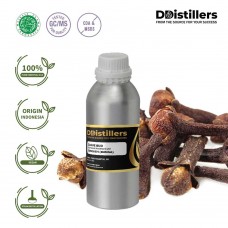
CLOVE
TERPENE NATURAL ISOLATE OIL By DDISTILLERS
Brand:
DDistillers
INCI
name: Clove Terpene
Product
Category: Single natural isolate, purity: 100%
Barcode:
-
HS
Code: 33019090
CAS#:
FEMA#:
-
Extraction
method: Fractional Distillation
PRODUCT
DESCRIPTION
Clove
Terpene Natural Isolate Oil is a natural terpene isolate extracted from clove
essential oil (Syzygium aromaticum) through fractional distillation, a
distillation method that separates components based on differences in boiling
points to achieve high purity without thermal degradation. This process begins
with steam distillation of cloves to obtain raw essential oil, then precisely
fractionated to isolate the pure terpene fraction with sesquiterpene
concentrations up to 90%, minimizing contaminants such as eugenol.
Organoleptic
Characteristics:
·
Color: Yellow to brown
liquid.
·
Aroma: Woody-spicy,
peppery with warm, earthy, slightly spicy clove-like nuances that are soothing.
·
Texture: Light to medium
liquid, low volatility, with slow evaporation for long-lasting and stable
aromatic effects.
Composition:
Clove
terpene is dominated by β-caryophyllene (≥70%) as the main sesquiterpene,
accompanied by α-humulene (5–10%) and other minor terpenes, functioning as a
non-psychoactive cannabinoid through interaction with CB2 receptors for
anti-inflammatory modulation and reduction of oxidative stress. This compound
also exhibits strong antimicrobial activity against pathogenic bacteria,
antioxidant properties for cellular protection, as well as muscle-relaxant and
neuroprotective effects, consistent with the traditional use of cloves in
Southeast Asian herbal medicine. This isolate is ideal for cosmetics and
personal care formulations such as perfume fixatives, anti-acne lotions,
aromatherapy soaps, or soothing creams, where it enhances aroma stability,
supports natural claims, and provides long-term grounding effects with high
bioavailability.
BOTANICAL
& MORPHOLOGY
Clove
terpene primarily originates from plants of the Myrtaceae family, specifically
Syzygium aromaticum (clove) in the tropical regions of Indonesia, especially
the Maluku Islands as the native habitat. Syzygium aromaticum is an evergreen
tree with wide distribution in humid tropical climates, including Indonesia,
India, Madagascar, Tanzania, Sri Lanka, and Brazil, cultivated intensively in
agroforestry plantations. This plant grows optimally in warm tropical climates
(average temperature 20–30°C, rainfall 1,500–2,500 mm/year), in fertile
volcanic, loamy, or lateritic soils that are loose and well-drained with pH 5–7
and an elevation of 0–1,000 masl.
Botanical
characteristics of Syzygium aromaticum:
- Habit: Evergreen
tree 5–20 meters tall (commonly 8–12 m), with straight trunk and broad
rounded or dense conical crown; semi-erect and low branches, often pruned
to facilitate flower bud harvesting; deep taproot for stability in hilly
soils.
- Trunk & bark: Trunk
diameter up to 30–60 cm, grayish-brown bark that peels in thin plates;
reddish resinous sap containing phenolic compounds such as eugenol and
sesquiterpenes (including β-caryophyllene as precursor of clove terpene).
- Leaves: Simple,
opposite or alternate, elliptic-lanceolate (length 8–18 cm, width 4–7 cm),
glossy green surface above and paler beneath with pinnate veins;
containing essential oil glands that produce terpenes as chemical defense
against pathogens.
- Flowers: Hermaphroditic,
arranged in terminal panicles 5–15 cm long; flower buds nail-shaped (1–2
cm long), light green turning pink before blooming; small flowers with 4
green petals, 4 sepals, and many yellowish-white stamens; mainly
pollinated by insects such as bees during the dry season, with young buds
being the main source of clove terpene (sesquiterpene fraction up to
15–20% in essential oil).
- Fruit: Round
or elliptical berry (1–2 cm diameter), red to dark purple when ripe,
containing a single seed; although the fruit is rarely harvested, flower
buds are collected before blooming to produce essential oil rich in
terpenes such as β-caryophyllene (≥70% in terpene isolate fraction).
Ecology
& Distribution:
Syzygium
aromaticum grows naturally in lowland tropical rainforests or mixed plantations
in the Maluku region (Indonesia) as an endemic species, now widely distributed
across global wet tropical zones through the spice trade since the 16th
century. The plant tolerates partial shade, high humidity, and acidic soil,
playing a role in agroforestry ecosystems as a shade tree supporting crop
diversification and preventing erosion on volcanic slopes. Clove terpene, as
the volatile fraction of clove, functions in plant defense against herbivores,
pathogenic fungi, and environmental stress through natural antimicrobial
properties, as well as attracting insect pollinators through its strong spicy
aroma.
Ecological
Role:
- Provides habitat for
wildlife, including Maluku endemic birds and pollinating insects, through
dense canopy offering protection and food sources.
- Deep root systems
and wide canopy prevent soil erosion in landslide-prone hilly areas and
improve soil fertility through nutrient-rich leaf litter.
- Sap and terpene
compounds support soil microbial biodiversity and regulate plant
competition through allelopathic effects, while contributing to the
conservation of native Indonesian spices through organic plantations.
HISTORY
& TRADITIONAL USE
Clove
terpene, as a natural sesquiterpene fraction extracted from clove essential oil
(Syzygium aromaticum)—primarily β-caryophyllene (≥70%) and α-humulene—has a
long historical record as part of traditional medicine and spice trade in the
tropical regions of Asia. Originating from the Maluku Islands (Spice Islands)
in Indonesia as its native habitat, cloves and their terpene fractions have
been used since the Han Dynasty in China (around 200 BC) as “chicken-tongue
spice” to relieve toothache, digestive issues, and as a warm antiseptic, either
through direct clove chewing or essential oil infusion.
In
the Indian Ayurvedic system (around 1500 BC), clove terpene—rich in
β-caryophyllene up to 15–20%—was recommended to balance vata and kapha doshas,
treat arthritis, asthma, intestinal infections, and nausea, thanks to its
natural anti-inflammatory and antimicrobial properties. Meanwhile, indigenous
communities of Southeast Asia and ancient China used it for wounds, mouth pain,
and respiratory support, with Hippocrates in Ancient Greece (around 400 BC)
documenting the use of similar spices for digestive and respiratory issues.
During
the Middle Ages, clove terpene became a key commodity in Portuguese and Dutch
spice trade (16th century), spreading into Europe as a component of balms,
theriac detoxification formulations, food preservatives, and royal
perfumes—helping to combat plagues and maintain aroma stability. Scientific
advancements began in the 1830s when French chemists isolated eugenol from
clove essential oil through steam distillation, followed by the separation of
specific terpene fractions in the early 20th century; the structure of
β-caryophyllene was determined in the 1960s via spectroscopy, and
pharmacological research in the 1970s uncovered its interaction with type 2
cannabinoid receptors (CB2), making it a non-psychotropic phytocannabinoid for
immune modulation without euphoric effects.
In the post-2000 era, clove terpene became widely recognized in modern applications, including cosmetics as an aroma fixative and antimicrobial agent in anti-acne lotions, as well as nutraceuticals for managing non-alcoholic fatty liver disease and neuroprotective effects. Today, alongside the trend of plant-based therapies, it is being studied for anti-cancer and anti-inflammatory treatments, bridging the traditional spice heritage of Maluku with contemporary innovations in pharmaceuticals and personal care.
VISIT OUR MARKETPLACE:



| Specification | |
|---|---|
| Source of Material | Source Material: Essential oils derived from cloves oil (Syzygium aromaticum). Origin: Indonesian |
| Cultivation | Conventionally harvested and
periodically replanted to ensure sustainability |
| Main Content | β-Caryophyllene (≥70%), α-Humulene (5-10%), as well as
minor terpenes such as trace eugenol (<5%) and other sesquiterpenes |
| Organoleptik |
|
| Solubility | Insoluble in water but soluble in alcohol (such as ethanol), essential oils, and organic solvents. |
| Blend well | pencampuran
dengan bahan berbasis air tanpa emulsifier
Compatible with other terpenes (e.g., pinene, limonene),
spice essential oils (e.g., cinnamon, nutmeg), or carrier oils (e.g., jojoba,
sweet almond oil). Avoid mixing with water-based ingredients without an
emulsifier. |
| Downstream product application | Cosmetics and Personal Care Formulation |
| Shelf Life | 5 years |
| Storage instructions | Store
in a cool (below 25 °C), dry, and dark place. Keep tightly sealed to prevent
oxidation and volatilization. |
| Allergies and general precautions |
|
Related Products