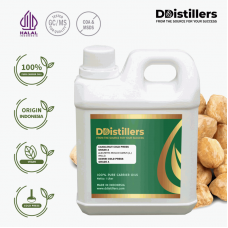
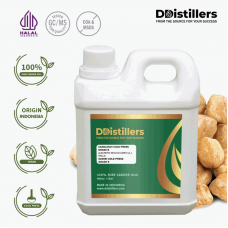
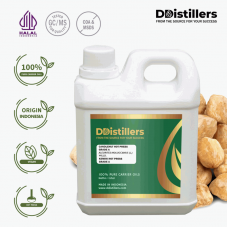
Halal Certificate: 33110034666001125
Export Documentation Available
- Certificate of Analysis (COA)
- Material Safety Data Sheet (MSDS)
- Phytosanitary Certificate
- Halal Certificate
- CITES permit (required for
international trade)
- Not a medicinal product. Not intended to replace professional diagnosis or medical treatment. Individual results may vary.
- Theobroma
cacao – World Agroforestry Database (PDF)
- Cocoa
Bean – Wikipedia
- Cocoa
Butter – Wikipedia
- Origin,
Domestication, Taxonomy, Botanical Description, Genetics and Cytogenetics of
Cacao – JournalCRA
- Theobroma
cacao – PROTA Database
- Health
Benefits of Cocoa and Chocolate – PMC
- Cocoa
and Cardiovascular Health – PMC
- Cocoa
Polyphenols Beyond Antioxidant Properties – PMC
- Cocoa
and Brain Health – PMC
- Cocoa
– Britannica
- Cocoa
and Human Nutrition – Frontiers in Nutrition
- Carrier
Oils in Formulation – Humblebee & Me
- Application
of Cocoa in Food Science – MDPI Applied Sciences
- Cocoa
Composition and Health Benefits – MDPI Foods
- List
of Carrier Oils – Pure Oils India
- Fatty
Acid and Triglyceride Profile of Cocoa Butter – ResearchGate
- Genetic
Resources of Cocoa (Theobroma cacao L.) – ResearchGate
- Cocoa
Butter as an Effective Moisturizer – ResearchGate
- Cocoa
Butter and Related Compounds – ScienceDirect Book
- Cocoa
Butter in Food and Cosmetic Applications – ScienceDirect
- Cocoa
Polyphenols and Inflammation – ScienceDirect
- Cocoa
Flavanols and Cognitive Function – ScienceDirect
- Cocoa
Butter Processing and Applications – ScienceDirect
- Theobroma
cacao – Agricultural and Biological Sciences Topic – ScienceDirect
- Cocoa
Butter – Chemistry Topic – ScienceDirect
- Cocoa
Butter in Cosmetics – SCIRP
- Choosing
the Right Oils for Cosmetic Perfection – Sustainable Botanicals
Oleic
Acid
- Anti-inflammatory
→ soothes skin irritation (dermatitis, mild eczema)
- Enhances
penetration of active compounds
- Supports
tissue regeneration
Stearic
Acid
- Provides
a protective barrier, locks in moisture
- Aids
wound healing
- Improves
cosmetic texture and stability
Palmitic
Acid
- Emollient
effect → smooth skin feel
- Strengthens
skin barrier, prevents transepidermal water loss
- Mild
antioxidant function against oxidative stress
Linoleic
Acid
- Essential
fatty acid, restores skin barrier
- Anti-comedogenic,
reduces acne formation
- Promotes
cell regeneration
Polyphenols
& Phytosterols (minor components)
- Potent
antioxidants, protect against free radical damage
- Anti-aging
and UV-protective potential
Skin
Moisturizer
- Forms
a protective layer that retains skin hydration
- Common
in creams, lotions, and body butters
Hair
& Scalp Care
- Nourishes
hair shaft, prevents dryness, reduces dandruff
- Used
in hair masks and conditioners
Anti-aging
& Facial Care
- Rich
in antioxidants to reduce fine lines and maintain elasticity
- Found
in facial balms, serums, and night creams
Cosmetic
Ingredient
- Acts
as an emollient for smoother product texture
- Provides
soft feel in lip balms, butters, and foundations
Soothing
Agent
- Calms
mild skin irritation from sun or environment
Massage
Oil
- Thick,
moisturizing, with a relaxing natural aroma
FORMULATION
IDEAS
1.
Moisturizing Body Butter
- Cocoa
Carrier Oil (cold-pressed): 20 ml
- Shea
Butter: 30 g
- Coconut
Oil: 15 ml
- Beeswax:
10 g
- Vitamin
E: 5 drops
Instructions:
- Melt
shea butter, beeswax, and cocoa oil using a double boiler (45–50 °C).
- Add
coconut oil and stir.
- Cool
to <40 °C, add vitamin E, stir well.
- Pour
into a clean container, allow to solidify.
2.
Natural Lip Balm
- Cocoa
Carrier Oil: 10 ml
- Cocoa
Butter: 15 g
- Beeswax:
10 g
- Almond
Oil: 10 ml
- Vitamin
E: 3 drops
Instructions:
- Melt
cocoa butter, beeswax, and cocoa oil (~45 °C).
- Add
almond oil, mix well.
- Cool
slightly, add vitamin E.
- Pour
into small jars or tubes; allow to harden.
3.
Hair Mask for Dry Hair
- Cocoa
Carrier Oil: 15 ml
- Olive
Oil: 10 ml
- Aloe
Vera Gel: 20 ml
- Argan
Oil: 5 ml
- Vitamin
E: 5 drops
Instructions:
- Mix
all ingredients until homogeneous.
- Apply
from roots to tips, leave for 20–30 minutes.
- Rinse
with mild shampoo.
4.
Ointment for Dry/Irritated Skin
- Cocoa
Carrier Oil: 15 ml
- Shea
Butter: 10 g
- Beeswax:
8 g
- Calendula
Infused Oil: 10 ml
- Vitamin
E: 5 drops
Instructions:
- Melt
shea butter, beeswax, and cocoa oil using a double boiler.
- Add
calendula oil, stir well.
- Cool
to <40 °C, add vitamin E.
- Pour
into a small jar, store in a cool place.
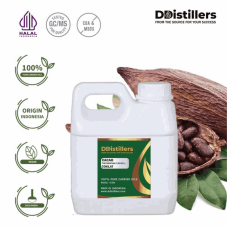
CACAO
/ COKLAT CARRIER OIL By DDISTILLERS
Brand:
DDistillers
Botanical name: Theobroma cacao L.
INCI name: Theobroma Cacao (Cocoa) Seed Oil
Product Category: Single carrier oil, purity: 100%
HS Code: 15159099
CAS#: 8002-31-1
FEMA#: –
Extraction Method: Cold Press
PRODUCT
DESCRIPTION
Cocoa
butter, or cocoa seed oil, is a natural fat obtained from the seeds of Theobroma
cacao L. through a cold-pressing method. This extraction process avoids
high heat, preserving the bioactive compounds and fatty acid structure. The
result is a pale-yellow, semi-solid fat at room temperature with a delicate
chocolate aroma. Organoleptically, cocoa butter has a distinct flavor and
scent, with a firm consistency that melts smoothly upon skin contact.
Its
physical characteristics are determined by its triglyceride profile, dominated
by stearic, palmitic, and oleic acids, with smaller amounts of linoleic acid.
At temperatures below ±30 °C, cocoa butter solidifies, with a melting point of
±34–36 °C, allowing it to melt at body temperature (~37 °C). This makes it
highly suitable for cosmetic and skincare formulations, providing softness,
hydration, and a thin protective layer that helps retain skin moisture.
For
liquefying solid cocoa butter, the best method is gentle heating via a double
boiler at around 40–45 °C to maintain fat stability and prevent crystal
polymorphism disruption. Thanks to its stable physicochemical properties,
cold-pressed cocoa butter is widely used in lip balms, lotion bars, body
butters, ointments, and moisturizers, recognized as a safe and effective
natural ingredient.
BOTANICAL
& MORPHOLOGY
The
cacao tree (Theobroma cacao L.), from the Malvaceae family, is a
tropical evergreen tree, originally native to the Amazon basin and now
cultivated worldwide in tropical regions.
Key
Botanical Features
- Habit:
Medium-sized tree, typically 4–8 m in cultivation, up to >10 m in the
wild. Dense canopy with low branching.
- Stem
& Roots: Straight trunk with grayish-brown
bark, shallowly furrowed. Strong taproot with lateral roots suitable for
loose tropical soils.
- Leaves:
- Shape:
Elliptic to lanceolate
- Size:
10–30 cm long, 4–10 cm wide
- Color:
Glossy dark green; young leaves reddish before turning green
- Flowers
(Cauliflorous):
- Grow
directly on trunk/branches
- Small
(~1 cm), white-yellowish to reddish
- High
flowering but few develop into fruits
- Fruits
(Pods):
- Shape:
Oblong to elongated
- Size:
15–25 cm long, 7–10 cm diameter
- Thick,
ridged rind; color varies (green, yellow, orange, red depending on
variety/maturity)
- Seeds:
- Each
pod contains 20–60 seeds
- Surrounded
by sweet white pulp
- Seeds
contain cocoa butter, the raw material for cocoa oil
Ecology
& Growing Conditions
- Optimal
climate: 21–32 °C, high humidity, rainfall 1,500–2,000 mm/year
- Soil:
Fertile, well-drained, loamy; pH 5.0–7.5
- Distribution:
Tropical regions ±20° N–S; major producers include Indonesia, Ghana, and
Ivory Coast
HISTORY
& USAGE
Cocoa
oil (commonly known as cocoa butter) has been used since ancient Mesoamerican
civilizations, including the Maya and Aztecs, who used cocoa beans as
ceremonial beverages, currency, and medicinal fat for dry skin and wounds. The
name Theobroma (“food of the gods”) reflects its sacred status.
Introduced
to Europe in the 16th century by the Spanish, cocoa butter separation
techniques evolved during the 19th century, enabling its use in cosmetics and
pharmaceuticals. Historically, it served as a base for ointments and
suppositories, owing to its body-temperature melting range (34–38 °C). Over
time, its emollient, moisturizing, and soothing qualities made it a staple in
creams, salves, and anti-stretch mark products.
Today,
cold-pressed cocoa butter is a key ingredient in cosmetics, pharmaceuticals,
and aromatherapy. Its fatty acids (stearic, palmitic, oleic) and bioactive
polyphenols offer antioxidant, anti-inflammatory, and anti-aging benefits,
reinforcing its role as a premium natural ingredient.
VISIT OUR MARKETPLACE:



| Specification | |
|---|---|
| Source of Material | Source Material: Cocoa Beans Origin: Indonesian |
| Cultivation | Conventionally harvested and
periodically replanted to ensure sustainability |
| Main Content | Oleic acid, linoleic acid, stearic acid, palmitic acid |
| Organoleptik |
|
| Solubility | Soluble in cosmetic esters and oils; insoluble in water |
| Blend well | Blends well with essential oils and other carrier oils |
| Downstream product application | Cosmetics and Personal Care Formulation |
| Shelf Life | 2 years |
| Storage instructions | Storage Guidelines:
|
| Allergies and general precautions | Allergen &
Precautionary Notes:
|
Related Products