Not a medicinal product. Not intended to replace professional diagnosis or medical treatment. Individual results may vary.
Halal Certificate: 15240067741220
Export Documentation Available
- Certificate of Analysis (COA)
- Material Safety Data Sheet (MSDS)
- Phytosanitary Certificate
- Halal Certificate
- CITES permit (required for
international trade)
SCIENTIFIC REFERENCES:
2. Cold-pressed
canola oil reduces hepatic steatosis – PubMed
3. Canola
Oil – ScienceDirect Topics
4. Discussion:
Cold-pressed canola oil reduces hepatic steatosis – Reddit
/r/ScientificNutrition
5. International
Research Journal of Food and Nutrition (IRJFN) 2020
6. Rapeseed
Oil – ScienceDirect Topics
7. Nutritional
and functional properties of rapeseed proteins – ScienceDirect
8. Recent
advances in rapeseed oil processing and utilization – ScienceDirect
10. Rapeseed
Oil: Uses, Nutrition, and Risks – Verywell Health
Therapeutic
Benefits:
- Skin Barrier Support:
Linoleic acid is a ceramide precursor for epidermal barrier repair.
- Mild Anti-Inflammatory Action:
ALA modulates inflammatory mediators.
- Enhanced Permeability &
Flexibility: Oleic acid improves lipid fluidity
in the stratum corneum.
- Antioxidant Protection: Tocopherols defend skin lipids and formulations from oxidation.
FORMULATION
IDEAS (Selected Examples)
- Face Oil “Omega Balance” – 100 ml
- Canola Oil 50 ml
- Jojoba Oil 30 ml
- Rosehip Oil 19 ml
- Mixed Tocopherols 1
ml (1%)
- Body Lotion Emollient – 200 g
- Water Phase: Rose
water 100 g, Purified water 40 g, Glycerin 5 g
- Oil Phase: Canola
Oil 30 g, Emulsifying wax NF 6–8 g, Cetyl alcohol 2 g
- Cool Down: Vitamin
E 0.5 g, Broad-spectrum preservative 0.8–1.0%, Optional fragrance ≤0.3%
- Hair Serum Anti-Frizz – 50 ml
- Canola Oil 20 ml
- Argan Oil 15 ml
- Grapeseed Oil 14 ml
- Lavender Essential
Oil ≤0.5 ml (1%)
- Vitamin E 0.5 ml
(1%)
- Massage Oil “Relaxing” – 100 ml
- Canola Oil 60 ml
- Sweet Almond Oil 39
ml
- Lavender EO 0.7 ml
(0.7%)
- Peppermint EO 0.3
ml (0.3%)
APPLICATIONS
& BENEFITS
Cosmetics
& Personal Care:
- Lightweight emollient suitable for
all skin types, including combination and oily skin.
- Reduces transepidermal water loss
(TEWL) via linoleic acid support of the epidermal lipid barrier.
- Soothes skin with mild
anti-inflammatory and antioxidant support from ALA and tocopherols.
- Versatile base oil for serums,
lotions, hair oils, body oils, balms, and massage oils.
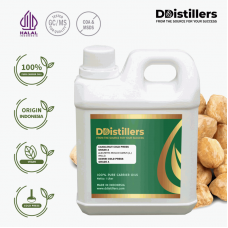
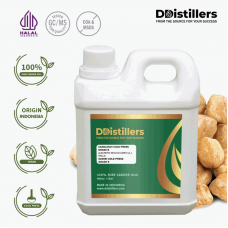
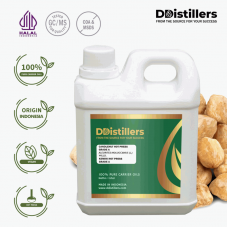
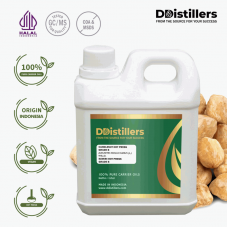
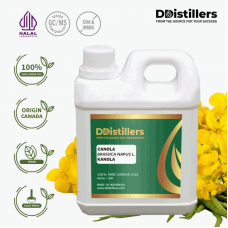
CANOLA CARRIER OIL By DDISTILLERS
INCI Name: Brassica napus (Seed) Oil
Product Category: Single Carrier Oil — Purity: 100%
Product Code: BB00421-CNL
Barcode: –
HS Code: 1515.90.99
CAS Number: 120962-03-0
FEMA Number: –
Extraction Method:
Cold pressing (mechanical extraction at low temperature).
PRODUCT
DESCRIPTION
Our
cold-pressed Canola Oil is a lightweight, highly stable carrier oil extracted
mechanically from Brassica napus L. seeds without chemical solvents. The
low-temperature pressing (<45 °C) and subsequent filtration preserve its
delicate profile of monounsaturated and polyunsaturated fatty acids (MUFA &
PUFA), phytosterols, and naturally occurring tocopherols (vitamin E), all of
which contribute to its antioxidant potential and skin-conditioning properties.
Key
Advantages:
- Lightweight texture, spreads easily,
absorbs quickly, and leaves a non-greasy finish.
- Optimal omega fatty acid profile:
high in oleic (ω-9), linoleic (ω-6), and alpha-linolenic (ω-3) acids.
- Natural vitamin E provides oxidative
protection for both formulations and skin.
- Relatively high oxidative stability
compared to flaxseed oil, owing to lower ALA content.
- Low comedogenic rating (approx. 1–2),
generally suitable for most skin types.
Note: Comedogenicity may vary between individuals.
BOTANICAL
& MORPHOLOGICAL INFORMATION
Taxonomy:
- Kingdom: Plantae
- Order: Brassicales
- Family: Brassicaceae
- Genus: Brassica
- Species: B. napus L.
Morphology:
- Root:
Deep taproot with extensive lateral branches, reaching depths >1 m.
- Stem:
0.5–1.5 m tall, cylindrical, green with purple tinges.
- Leaves:
Oblong, wavy margins, slightly hairy surface.
- Flowers:
Bright yellow clusters, four-petaled (typical of Brassicaceae).
- Fruit:
Siliques containing 15–40 small (1–3 mm) seeds in shades of black, brown,
or yellow.
HISTORICAL
BACKGROUND
Rapeseed
(Brassica napus) has been cultivated for millennia across Asia and
Europe, historically used for oil lamps and as an industrial lubricant. Early
varieties contained high erucic acid levels, which posed toxicity concerns at
high intake.
In
the 1970s, Canadian plant breeders developed low-erucic-acid (<2%) and
low-glucosinolate cultivars. These improved varieties were trademarked as
“Canola” (Canadian Oil, Low Acid) and have since become one of the most widely
consumed vegetable oils globally, valued in both culinary and cosmetic
applications.
VISIT OUR MARKETPLACE:



| Specification | |
|---|---|
| Source of Material | Source Material: Canola seeds Origin: Canada |
| Cultivation | Conventionally harvested and
periodically replanted to ensure sustainability |
| Main Content | Linoleic acid, oleic acid, palmitic acidm linolenic acid |
| Organoleptik |
|
| Solubility | Soluble in cosmetic esters and oils; insoluble in water |
| Blend well | Blends well with essential oils and other carrier oils |
| Downstream product application | Cosmetics and Personal Care Formulation |
| Shelf Life | 2 years |
| Storage instructions | Storage Guidelines:
|
| Allergies and general precautions | Allergen &
Precautionary Notes:
|
Related Products