GENERAL USES &
BENEFITS
- Moisturizing:
Acemannan helps retain skin moisture and improve elasticity.
- Antioxidant & Anti-inflammatory:
Phenolic compounds and vitamins help reduce mild irritation and protect
the skin against oxidative stress.
- Hair Care:
Nourishes the scalp, reduces mild dandruff, and softens hair.
FORMULATION IDEAS (DIY
RECIPES)
1. Natural Facial Serum
(Antioxidant & Moisturizing)
Ingredients:
- Aloe Vera Macerated Oil: 10 mL
- Jojoba Oil: 15 mL
- Vitamin E Oil: 3 drops
Instructions:
- Combine all ingredients in a 30 mL
amber glass bottle.
- Shake gently until well blended.
- Store in a cool place; use within 6
months.
Usage:
Apply 2–3 drops to clean skin and massage gently at night.
2. Herbal Massage Oil
(Relaxing & Nourishing)
Ingredients:
- Aloe Vera Macerated Oil: 50 mL
- Almond Oil: 50 mL
- Lavender Essential Oil: 5 drops
(optional)
Instructions:
- Blend all ingredients in a 100 mL
glass bottle.
- Shake gently until uniform.
Usage:
Apply as needed for body massage.
3. Cold Cream for
Sensitive Skin
Ingredients:
- Aloe Vera Macerated Oil: 30 mL
- Beeswax: 10 g
- Rose Water: 40 mL
- Vitamin E Oil: 3 drops
Instructions:
- Melt beeswax with Aloe oil using a
double boiler.
- Remove from heat and gradually whisk
in rose water until a cream forms.
- Add vitamin E, mix thoroughly, and
store in a clean jar.
Usage:
Apply to the face or body at night as a moisturizer.
4. Hair & Scalp Oil
Ingredients:
- Aloe Vera Macerated Oil: 40 mL
- Coconut Oil: 40 mL
- Olive Oil: 20 mL
Instructions:
- Combine oils in a 100 mL bottle.
- Shake until blended.
Usage:
Massage into scalp 30 minutes before shampooing, 2–3 times weekly.
5. Herbal Salve (For
Minor Rashes or Insect Bites)
Ingredients:
- Aloe Vera Macerated Oil: 30 mL
- Beeswax: 10 g
- Calendula Oil: 20 mL
Instructions:
- Melt beeswax and oils together using
a double boiler.
- Mix thoroughly, pour into a small
jar, and let solidify.
Usage:
Apply sparingly to affected areas.
6. Simple Nanoemulsion
for Oily Skin (Educational Use Only)
Ingredients:
- Aloe Vera Macerated Oil: 10 mL
- Distilled Water: 40 mL
- Natural Emulsifier (Soy Lecithin):
2 g
- Tea Tree Essential Oil: 2 drops
Instructions:
- Mix lecithin with Aloe oil until
homogeneous.
- Gradually blend in water using a
mini-mixer until an emulsion forms.
- Store in a dark glass bottle in the
refrigerator; use within 1 week.
Usage:
Lightly mist onto oily skin, avoiding the eye area.
Safety Notes for All
Formulations:
- Always perform a patch test before
widespread use.
- Use clean, dry containers to avoid
contamination.
- Store in a cool, dark place away from
direct sunlight.
Not for oral consumption unless supervised by a healthcare professional.
Not a medicinal product. Not intended to replace professional diagnosis or medical treatment. Individual results may vary.
Halal Certificate: 15240067741220
Export Documentation Available
- Certificate of Analysis (COA)
- Material Safety Data Sheet (MSDS)
- Phytosanitary Certificate
- Halal Certificate
- CITES permit (required for
international trade)
SCIENTIFIC REFERENCES:
1. Preparation and Evaluation of Hair Oil Enriched With Aloe Vera
4. Aloe
vera and Wound Healing: A Brief Review (SciELO Brasil)
5. Effect
of Aloe Vera on the Proliferation Phase of Oral Mucosal Wound Healing in Rats
(UGM Journal)
7. A New Biomaterial
Derived from Aloe Vera—Acemannan from Basic Studies to Clinical Application
(MDPI)
10. History
of Wound Care – Wikipedia
11. The Role of Aloe Vera in Various Fields (Journal of Orofacial
Sciences)
Wound Healing with Botanicals (PMC NCBI)
THERAPEUTIC BENEFITS
- Wound & Minor Burn Healing:
Promotes faster skin cell regeneration.
- Soothes Skin Irritations (Dermatitis,
Psoriasis, Eczema): Helps reduce mild inflammation.
- Local Immunomodulator:
Supports the skin’s natural defense mechanisms.
- Metabolic Support:
Oral Aloe extracts may help regulate blood glucose; macerated oil is
intended primarily for topical use.
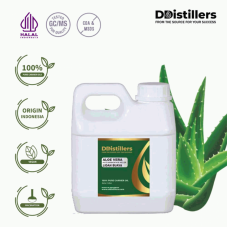
ALOE VERA CARRIER OIL By DDISTILLERS
INCI Name: Aloe barbadensis (Aloe Vera) Oil
Product Category: Single Carrier Oil (100% Pure)
Barcode: –
HS Code: 15159029
CAS Number: 85507-69-3
FEMA Number: –
Halal Certification: –
Extraction Method: Maceration.
PRODUCT DESCRIPTION
This oil is produced
through maceration, a process in which Aloe vera (A. barbadensis
Miller) leaves or gel are soaked in a carrier oil (such as coconut, jojoba, or
olive oil) at mild to moderate temperatures. Over several days to weeks, the
nutrients and bioactive compounds of Aloe Vera diffuse into the carrier oil.
The mixture is then filtered to obtain a clear, nutrient-rich oil ready for
commercial use.
Product Specifications:
- Raw Material:
Gel or leaves thoroughly cleaned to remove latex (to minimize aloin
content).
- Physical Characteristics:
Pale yellow to light green color, lightweight texture, mild herbal aroma.
- Main Constituents:
- Polysaccharides such as Acemannan
(hydration & skin regeneration).
- Vitamins A, C, E, B12, enzymes,
amino acids, and antioxidants.
- Phytosterols and phenolic compounds
with anti-inflammatory and antibacterial properties.
BOTANY & MORPHOLOGY
OF ALOE VERA (A. barbadensis Miller)
Aloe vera is a succulent
plant from the family Asphodelaceae, widely cultivated in arid regions
of Africa, Asia, and the Americas.
- Leaves form a basal rosette, thick
and fleshy, measuring 40–60 cm in length with fine white serrations along
the edges.
- Each leaf consists of three layers:
- Inner Gel (~99% water):
rich in sugars, polysaccharides, vitamins, enzymes, proteins, and
minerals.
- Latex Layer (bitter yellow sap):
contains anthraquinones such as aloin and emodin.
- Outer Rind:
a 15–20-cell-thick protective layer responsible for carbohydrate
synthesis.
- Tubular yellow-orange flowers grow on
racemes measuring approximately 60–90 cm.
HISTORICAL BACKGROUND
& TRADITIONAL USES OF ALOE VERA OIL
The use of Aloe Vera
macerated oil dates back to ancient civilizations:
- Mesopotamia (2100–2000 BCE):
Recorded as a medicinal plant for wound healing.
- Ancient Egypt (1550 BCE):
Referenced in the Ebers Papyrus and famously used by Cleopatra and
Nefertiti for beauty and skin care.
- Greece & Rome:
Dioscorides and Hippocrates documented Aloe for treating wounds,
inflammation, and digestive issues.
- 15th–17th Centuries:
Introduced to the New World by Spanish explorers and widely adopted across
Asia and Europe.
- 20th Century:
Scientifically recognized in the 1930s when Aloe Vera preparations,
including macerated oil, were used to treat radiation burns, paving the
way for modern dermatological research.
Traditionally, Aloe Vera infused oil has been applied for skin care, hair treatment, massage oils, and lotions to soothe, moisturize, and support the healing of minor irritations and superficial wounds.
VISIT OUR MARKETPLACE:



| Specification | |
|---|---|
| Source of Material | Raw Material: Aloe vera leaves or gel Asal: Indonesia |
| Cultivation | Conventionally harvested and
periodically replanted to ensure sustainability |
| Main Content | Linoleic acid, Oleic acid, Palmitic acid, Stearic acid. |
| Organoleptik | Color:
Pale yellow to light green. Aroma:
Characteristic Aloe Vera scent. |
| Solubility | Soluble in cosmetic esters and oils; insoluble in water |
| Blend well | Blends well with essential oils and other carrier oils |
| Downstream product application | Cosmetics and Personal Care Formulation |
| Shelf Life | 2 years |
| Storage instructions | Storage Guidelines:
|
| Allergies and general precautions | Allergen &
Precautionary Notes:
|
Related Products