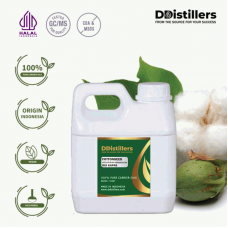
- PlantFAdb – Ceiba pentandra (Kapok)
- Ekstraksi Minyak
Biji Kapuk dengan Soxhletasi
- Analisis Proksimat
Biji Kapuk (Ceiba pentandra)
- Ceiba pentandra
(L.) Gaertn.: Botany, Uses, Pharmacological Properties
- Morfologi dan
Taksonomi Randu (Ceiba pentandra L. Gaertn.)
- Energi dari Hutan
– Ceiba pentandra
- Wikipedia – Kapoköl (Minyak Kapuk)
- Ekstraksi Minyak Biji Kapuk – Sainspedia
- Repository IPB – Kajian Ceiba pentandra
- Studi Teknis
Ekstraksi Biji Kapuk
- Mengenang Kapuk
Jawa yang Pernah Menguasai Dunia
- Pemanfaatan Daun
Randu (Ceiba pentandra)
- Artikel Edukasi
tentang Kapuk – UKI Journal
- Phytochemistry and Bioactivity of Ceiba pentandra
(PubMed)
- Ceiba pentandra –
Pharmacological Review (De Gruyter)
- Evaluation of Kapok Seed Oil – Science World Journal
- Medicinal Potentials of Ceiba pentandra (PMC)
- Evaluation of
Phytochemicals and Antioxidant Activities of Kapok Seed Oil
- Kapok Seed Oil
Processing Plant Project Report – IMARC
- Physical and Chemical Attributes of Kapok Seed Oil
- Physicochemical
Properties of Kapok Oil (AOCS Journal)
FORMULATION
IDEAS
A.
Face Oil / Facial Serum
- Kapok oil:
85–90%
- Squalane
(optional): 5–10%
- Vitamin E:
0.5%
- Essential
oils: ≤1% (per safety guidelines)
B.
Body Oil / Body Serum
- Kapok oil:
90–95%
- MCT oil
(optional): 4–5%
- Vitamin E:
0.5%
C.
Lip Balm / Protective Salve
- Kapok oil:
45–50%
- Beeswax:
25–30%
- Shea butter:
20–25%
- Vitamin E:
0.5%
D.
Lightweight Lotion (O/W Emulsion)
- Kapok oil:
5–8% (oil phase)
- Emulsifier
(e.g., glyceryl stearate citrate) – sufficient to stabilize
- Glycerin:
3–5% (humectant)
- Vitamin E:
0.2–0.5%
Practical
Notes (Safety & Storage):
- Always
perform a patch test before use on sensitive skin.
- Store in
dark, cool conditions in well-sealed containers.
- For external
use only – not intended for ingestion.
Not a medicinal product. Not intended to replace professional diagnosis or medical treatment. Individual results may vary.
Halal Certificate: 15240067741220
Export Documentation Available
- Certificate of Analysis (COA)
- Material Safety Data Sheet (MSDS)
- Phytosanitary Certificate
- Halal Certificate
- CITES permit (required for
international trade)
·
Cosmetic
& Skincare: Lightweight
emollient, suitable for lotions, serums, and soaps.
·
Traditional
Medicine: Used for inflammation relief
and topical salves.
·
Antimicrobial
Properties: Shown to inhibit S.
aureus and E. coli.
·
Metabolic
Benefits: Research suggests potential
in lowering blood sugar and lipid levels.
·
Hepatoprotective
Effects: May protect the liver from
toxin-induced damage.
·
Biofuel
Potential: Suitable as a feedstock for biodiesel
production.
THERAPEUTIC
BENEFITS
Kapok
seed oil contains bioactive compounds such as phenolics, flavonoids,
alkaloids, and tannins, which exhibit:
·
Antioxidant
activity – protects against oxidative
stress.
·
Antimicrobial
effects – inhibits bacterial growth.
·
Anti-inflammatory
properties – supports eczema and
inflammatory skin conditions.
·
Diuretic
effects – traditionally used in folk
medicine.
KAPOK OIL
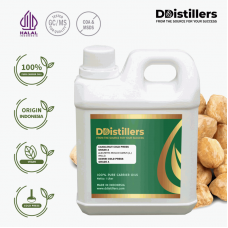
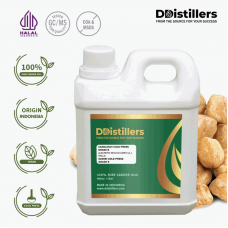
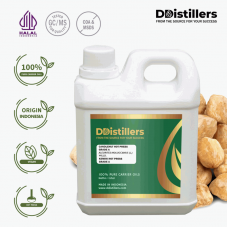
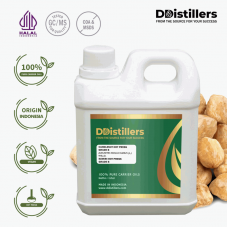
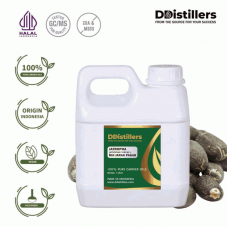
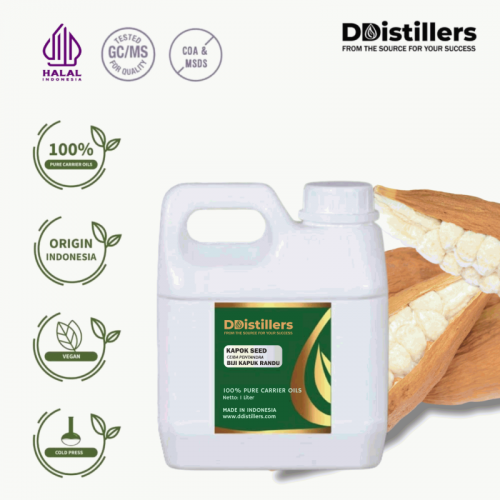
Brand: DDistillers
Product Name: Kapok Carrier Oil
Product Category: Single Carrier Oil, Purity: 100%
Product Code: BB00811_CTS
Botanical Name: Ceiba pentandra
INCI Name: Ceiba pentandra (Seed) Oil
Barcode: –
HS Code: 15159091
CAS No.: N/A
FEMA No.: –
Extraction Method: Cold-pressed
PRODUCT
DESCRIPTION
Kapok
seed oil is extracted from the seeds of the kapok tree (Ceiba pentandra),
widely cultivated in Indonesia. The oil is obtained through cold pressing
after removing the seed fibers. It is naturally rich in linoleic acid, oleic
acid, palmitic acid, and stearic acid, which give it a lightweight,
fast-absorbing texture that does not leave a greasy residue. The oil has a pale
yellow to golden appearance with a mild, neutral aroma. Its vitamin E
content and natural antioxidants make it valuable in cosmetic and personal
care industries, particularly in skincare formulations.
BOTANICAL
PROFILE (Ceiba pentandra)
·
Belongs to the
Malvaceae family.
·
A tall tropical
tree reaching up to 30 meters in height with trunk diameters of 1–3 meters.
·
Trunk is straight,
cylindrical, often covered with conical thorns, with grayish-brown bark.
·
Roots are strong
and deep with large buttresses, stabilizing the tree in tropical soils.
·
Leaves: Compound
leaves with 5–9 lanceolate leaflets, dark green on the upper surface and
lighter green underneath.
·
Flowers: Solitary
or small clusters, pale yellowish-white to pinkish, 2–3 cm in size.
·
Fruits: Elongated
capsules (10–20 cm), green when unripe, brown when mature, releasing small
black seeds embedded in silky kapok fibers.
·
Widely valued for
both fiber and seed oil and also used in traditional medicine.
HISTORICAL
BACKGROUND
The
utilization of kapok seed oil dates back to early 20th-century Indonesia,
particularly in Java during Dutch colonial times. Initially, kapok trees were
cultivated for their fibers, which were exported globally for
mattresses, textiles, and industrial uses.
·
Oil Extraction:
Kapok oil (also known as Kapoköl in German) has historically been extracted via
cold pressing. With ~25% oil content, it is non-drying (iodine value 85–100)
but prone to rancidity when exposed to air.
·
Traditional Uses:
Applied in soap-making, lubricants, and as an alternative fuel.
·
Economic Peak:
Between 1928–1936, Indonesia supplied 85% of the world’s kapok fiber demand.
·
Modern Research:
Current studies explore kapok seed oil as a renewable biodiesel source, with
Indonesian universities developing eco-friendly transesterification processes
using rice husk ash and CaO catalysts.
·
Today, kapok
remains cultivated for erosion control, shade, and local uses, though its
commercial role has declined compared to synthetic substitutes.
VISIT OUR MARKETPLACE:



| Specification | |
|---|---|
| Source of Material | Source Material: Kapok Seeds Origin: Indonesian |
| Cultivation | Conventionally harvested and
periodically replanted to ensure sustainability |
| Main Content | Linoleic acid, oleic acid, palmitic acid, stearic acid. |
| Organoleptik | ·
Appearance: Pale yellow to golden yellow liquid. ·
Aroma: Characteristic mild kapok seed scent. |
| Solubility | Soluble in cosmetic esters and oils; insoluble in water |
| Blend well | Blends well with essential oils and other carrier oils |
| Downstream product application | Cosmetics and Personal Care Formulation |
| Shelf Life | 2 years |
| Storage instructions | Storage Guidelines:
|
| Allergies and general precautions | Allergen &
Precautionary Notes:
|
Related Products