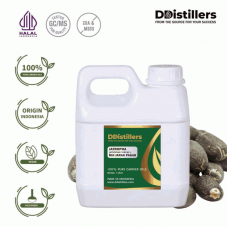
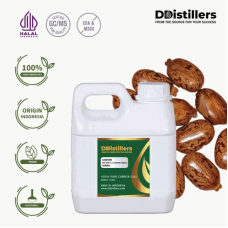
Halal Certificate: 15240067741220
Export Documentation Available
- Certificate of Analysis (COA)
- Material Safety Data Sheet (MSDS)
- Phytosanitary Certificate
- Halal Certificate
- CITES permit (required for
international trade)
Not a medicinal product. Not intended to replace professional diagnosis or medical treatment. Individual results may vary.
SCIENTIFIC REFERENCES:
1. Ogunniyi,
D.S. (2006) – Castor oil: A vital industrial raw material
2. BAB
II – Tanaman Jarak (Ricinus communis)
3. Fundamentals
of Pharmacognosy and Phytotherapy
4. Efficacy
and safety of castor oil for dermocosmetic use
6. Physicochemical
and stability profile of castor oil emulsions
7. Ricinoleic
acid: Chemistry and industrial applications
8. Castor
oil eye drops in blepharitis treatment
9. Hydrogenated
castor oil – ScienceDirect Topic
10. Castor
oil as a potential renewable resource
11. World
Journal of Biological and Pharmaceutical Health Sciences – Castor oil study
12. Super
Refined™ Castor Oil – Croda Pharma
13. Topical
Cream Formulation – Wikipedia
14. Shahidi
& Zhong (2010) – Lipid oxidation and improving oxidative stability
USES
& APPLICATIONS
·
Industrial:
Utilized as a bio-based polyol in polyurethane, concrete coatings, cosmetics
base oils, lubricants, inks, cold-resistant plastics, detergents, and
fragrances.
·
Pharmaceutical & Cosmetic:
Functions as an
emollient, moisturizer, and functional lipid in lotions, shampoos, soaps, and
ointments. Offers antibacterial activity and supports skin and ocular lipid
film integrity.
THERAPEUTIC
BENEFITS
·
Anti-inflammatory, Antibacterial,
Analgesic, Antioxidant:
Ricinoleic acid
inhibits inflammatory pathways, combats microbial activity, and reduces pain
perception via TRPV receptor modulation.
·
Blepharitis & Meibomian Gland
Dysfunction / Dry Eye:
Randomized
clinical trials show that cold-pressed castor oil applied twice daily for 4
weeks improves blepharitis symptoms (reduced OSDI score, margin healing,
decreased crusting) without adverse effects.
·
Dermatology (Infraorbital
Hyperpigmentation):
Exploratory
clinical studies demonstrate that castor oil–based creams, applied twice daily
for 2 months, significantly reduce melanin levels, wrinkles, and improve skin
elasticity (p < 0.05).
·
FDA-Approved Laxative:
Orally
administered as a stimulant laxative; ricinoleic acid triggers bowel movement.
Approved by the FDA for short-term use.
·
Limited or Controversial Evidence:
Claims regarding
hair growth, weight loss, detoxification, or cancer treatment remain
insufficiently supported by clinical research.
FORMULATION
IDEAS
(adapted
from peer-reviewed studies)
1.
Anti-Aging & Brightening Eye
Cream
o Castor
oil 10%, Almond oil 5%, Beeswax 2%, Glyceryl stearate 3%, Water 78%, Glycerin
2%, Vitamin E 0.5% (optional).
o Apply
twice daily for 2 months for improved brightness and elasticity.
2.
Ocular Ointment for Blepharitis / Dry
Eye
o Sterile
cold-pressed castor oil 100% (0.22 μm filtered).
o Apply
1–2 drops to lower eyelid twice daily for 4 weeks.
3.
Moisturizing Body Lotion
o Castor
oil 5%, Shea butter 5%, Emulsifier 4%, Water 84%, Glycerin 2%.
4.
Hair Growth Ointment
o Blend
castor oil with shea butter, pH ≈ 4.1; shown to stimulate hair growth in
rabbits within 28 days.
5.
Stable Emulsion
o Castor
oil ≈ 35%, Acacia gum 4%, Methyl cellulose 4%, Tween 20 30%, Water q.s., pH ≈
6.9; stability up to 90 days.
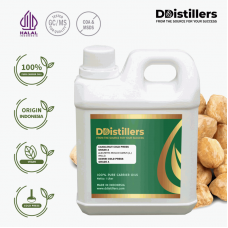
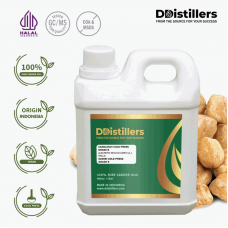
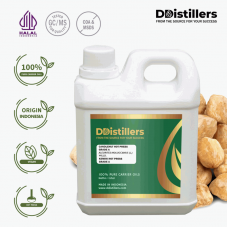
CASTOR CARRIER OIL – By DDistillers
INCI Name: Ricinus communis (Seed) Oil
Product Category: Single Carrier Oil – 100% Pure
Product Code: BB00511-CSS
Barcode: –
HS Code: 15153010
CAS No.: 8001-79-4
FEMA No.: –
Extraction Method: Cold Pressing (< 45 °C) to preserve bioactive compounds and minimize oxidative degradation.
PRODUCT
DESCRIPTION
Our
Castor Oil is a premium-grade vegetable oil obtained from the seeds of Ricinus
communis L. via cold pressing — a mechanical extraction method conducted at
low temperatures (< 45 °C) to maintain the integrity of bioactive
constituents and reduce oxidative breakdown. This viscous, pale-yellow oil is
predominantly composed of ricinoleic acid, along with oleic, linoleic, and
minor saturated fatty acids such as stearic and palmitic (< 1%). The primary
triglyceride, triricinolein, is largely responsible for its distinctive
physicochemical and functional properties.
BOTANY
& MORPHOLOGY
- Scientific Morphoanatomy:
Studies in the
western Mediterranean coastal region (Egypt) measured leaf morphometrics (lobes
count, size, sinus depth) and examined micro-morphological surface features
(adaxial and abaxial) using SEM, revealing stomatal patterns and epidermal
traits.
- General Description:
A fast-growing
perennial that can develop as a shrub or small tree up to 12 m in height.
Leaves are glossy, palmately lobed (5–12 lobes), with color ranging from bright
green to reddish-purple depending on cultivar genetics. In tropical
environments, specimens can reach 13 m with woody stems, large leaves (30–70
cm), serrated margins, and extrafloral nectaries on the petiole and lamina.
- Origin & Distribution:
Native to the
southeastern Mediterranean, East Africa, and India. Now widely distributed in
tropical and subtropical regions, and considered invasive in some areas.
HISTORICAL
BACKGROUND & TRADITIONAL USE
The
use of castor oil dates back to Ancient Egypt circa 4000 BCE, where it served
as fuel for lamps, a skin ointment, and a natural laxative. The Ebers
Papyrus records its medicinal use for “purging harmful substances” from the
body. In Ancient Greece and Rome, castor oil was employed for constipation
relief and pain management, while in India it became an integral part of
Ayurvedic medicine for alleviating inflammation and skin disorders.
The
term “castor” was popularized in 18th-century Europe when the oil was marketed
as a substitute for castoreum — a fragrant secretion from beaver glands used in
perfumery. By the 19th and early 20th centuries, castor oil was a strategic
industrial commodity, valued as a machine lubricant, soap ingredient, and a raw
material for cold-resistant plastics. Today, its applications extend to
cosmetics, pharmaceuticals, and biotechnology, making it one of the most
versatile plant oils globally.
VISIT OUR MARKETPLACE:



| Specification | |
|---|---|
| Source of Material | Source Material: Castor seeds Origin: Indonesian |
| Cultivation | Conventionally harvested and
periodically replanted to ensure sustainability |
| Main Content | Ricinoleic acid, oleic acid, linoleic acid. |
| Organoleptik |
· Color: Pale yellow. · Aroma: Characteristic seed-like, mildly neutral. |
| Solubility | Soluble in cosmetic esters and oils; insoluble in water |
| Blend well | Blends well with essential oils and other carrier oils |
| Downstream product application | Cosmetics and Personal Care Formulation |
| Shelf Life | 2 years |
| Storage instructions | Storage Guidelines:
|
| Allergies and general precautions | Allergen &
Precautionary Notes:
|
Related Products