FORMULATION
IDEAS
1.
Anti-Aging Face Serum
Ingredients:
- Papaya
Seed Oil: 1 tbsp
- Rosehip
Oil: 2 tsp
- Vitamin
E oil: 3 drops
- Lavender
Essential Oil: 2 drops
Method:
Mix in a 20 ml dark glass bottle, shake gently. Apply 2–3 drops on the face
before bedtime.
2.
Hair & Scalp Oil
Ingredients:
- Papaya
Seed Oil: 2 tbsp
- Argan
Oil: 1 tbsp
- Rosemary
Essential Oil: 5 drops
Method:
Blend in a 30 ml bottle. Massage onto scalp 1–2 times weekly, leave for 30
minutes, then wash with mild shampoo.
3.
Natural Body Lotion
Ingredients:
- Distilled
water: ½ cup
- Aloe
vera gel: 2 tbsp
- Papaya
Seed Oil: 1 tbsp
- Shea
Butter: 1 tsp
- Emulsifying
wax: 1 tsp
- Vitamin
E oil: 3 drops
- Essential
oil (lavender/chamomile): 2 drops
Method:
- Heat
oil phase (Papaya Seed Oil, Shea Butter, wax).
- Heat
water phase (water + aloe vera).
- Combine,
stir until emulsified.
- Once
cooled, add Vitamin E and essential oil.
- Store
in a pump bottle.
4.
Eye Roll-On (Dark Circles & Puffiness)
Ingredients:
- Papaya
Seed Oil: 1 tbsp
- Jojoba
Oil: 1 tsp
- Chamomile
Essential Oil: 1 drop
Method:
Place in a 10 ml roll-on bottle. Apply under eyes morning and evening.
Tips
- Use
dark glass bottles to prevent oxidation.
- Always
conduct a patch test before full application.
- Store
in a cool, dry place away from sunlight.
THERAPEUTIC
BENEFITS
- Oleic
Acid
- Deeply
moisturizes skin.
- Enhances
penetration of active compounds in cosmetic formulations.
- Supports
cell regeneration and tissue elasticity.
- Linoleic
Acid
- Essential
fatty acid that strengthens the skin barrier.
- Effective
for dry, sensitive, or dermatitis-prone skin.
- Anti-inflammatory,
reducing redness, irritation, and acne.
- Palmitic
Acid
- Protects
against transepidermal water loss.
- Improves
oil stability and texture in formulations.
- Stearic
Acid
- Provides
additional emollient effect.
- Forms
a protective layer on the skin surface.
Additionally,
papaya seed oil contains tocopherols (natural Vitamin E) and phytosterols,
which act as powerful antioxidants, combat free radicals, support wound
healing, and maintain skin elasticity.
- Sudha,
et al. Extraction and characterization of papaya seed oil. Journal of
Engineering and Chemical Engineering
- Nakasone,
H.Y. & Paull, R.E. Tropical Fruits. Springer
- Carica
papaya: Uses, Phytochemistry, and Pharmacological Activities. Springer
Chapter
- Small-Scale
Processing of Native and Introduced Amazon Fruits and Vegetables. OTCA
Report
- Carica
papaya phytochemical and pharmacological review. PMC
- Marfo,
E.K. et al. Chemical composition of papaya (Carica papaya) seeds. PubMed
- Sudha,
M.L. et al. Extraction of papaya seed oil. Academic Journals
- Oloyede,
O.I. Molecules: Phytochemical composition of papaya
- Carica
papaya diversity study. MDPI Diversity
- Horticulturae
journal: Carica papaya applications. MDPI
- Fatty
acid composition of papaya seed oils. ResearchGate
- Agroforestree:
A tree reference guide. ResearchGate
- Extraction
and characteristics of papaya seed oil in Congo. ResearchGate
- Investigation
on fatty acid composition of papaya seed oil. ResearchGate
- Molecular
and morphological assessment of Carica papaya. ResearchGate
- Comprehensive
review on papaya seed oil extraction & applications. ResearchGate
- Effect
of carotenoid pigments from papaya epicarp. ResearchGate
- Review
on herbal cosmeceuticals. ResearchGate
- Papaya
(Carica papaya) oil composition. SciELO Brazil
- Marfo,
E.K. et al. Food Chemistry: Papaya seed oil fatty acids
- Papaya
in functional foods. ScienceDirect Book Chapter
- Papaya
oil application in food processing. ScienceDirect
- Carica
papaya profile. ScienceDirect Topics
- Plant
secondary metabolism. ScienceDirect Topics
- Extraction
and characterization of papaya seed oil. Semantic Scholar
Halal Certificate: 33110034666001125
Export Documentation Available
- Certificate of Analysis (COA)
- Material Safety Data Sheet (MSDS)
- Phytosanitary Certificate
- Halal Certificate
- CITES permit (required for
international trade)
- Not a medicinal product. Not intended to replace professional diagnosis or medical treatment. Individual results may vary.
Skincare
& Cosmetics
- Natural
moisturizer with light, fast-absorbing texture.
- Helps
balance sebum production—suitable for oily and acne-prone skin.
- Used
in facial serums, lotions, anti-aging creams, soaps, and natural
sunscreens.
Hair
Care
- Nourishes
hair shafts, enhancing softness and shine.
- Helps
reduce dandruff and soothes dry or irritated scalp.
Aromatherapy
& Massage
- Functions
as a carrier oil to dilute essential oils.
- Provides
smooth glide with fast penetration during massage.
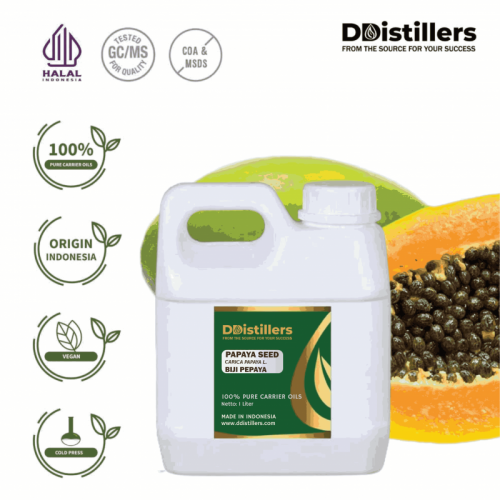
PAPAYA
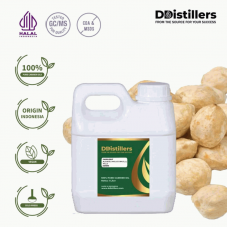
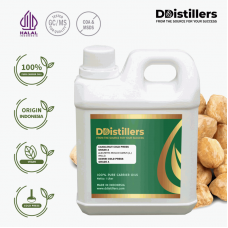
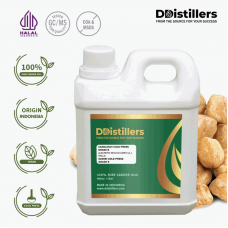
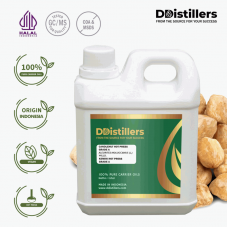
SEED / BIJI PEPAYA CARRIER OIL By DDISTILLERS
Brand:
DDistillers
Botanical
name:
Carica papaya L.
INCI
name:
Carica Papaya (Papaya) Seed Oil
Product Category: Single carrier oil, purity: 100%
HS
Code:
15159099
CAS#:
84012-30-6
FEMA#: –
Extraction Method: Cold Press.
PRODUCT
DESCRIPTION
Papaya
Seed Carrier Oil is a pure vegetable oil derived from papaya seeds (Carica
papaya L.) through the cold press method, a mechanical extraction technique
without chemical solvents or high heat. This method preserves vital bioactive
compounds, including unsaturated fatty acids, tocopherols (Vitamin E), and
phytosterols, which play a major role in the oil’s functional benefits and
stability.
Composition-wise,
papaya seed oil is classified as a high-oleic oil due to its rich oleic acid
content. It also contains palmitic and linoleic acids, making it relatively
stable against oxidation and non-drying in nature. This fatty acid profile
supports its emollient properties, delivering moisturizing, nourishing, and
protective benefits for the skin.
Organoleptically,
papaya seed oil presents a pale yellow to golden hue with a mild, slightly
nutty, and subtly fruity aroma. Its texture is moderately viscous yet absorbs
quickly into the skin, leaving it moisturized without a greasy residue.
High-quality fresh oil has a neutral to mild scent, while rancidity indicates
oxidation or poor storage. Papaya seeds contain approximately 20–35% oil by dry
weight, making them a valuable source of plant-based oil.
BOTANICAL
& MORPHOLOGY
Papaya
(Carica papaya L.) is a tropical plant from the Caricaceae family,
native to Central America and widely cultivated across tropical regions,
including Southeast Asia. It is known for its fast growth, high economic value,
and versatile plant parts ranging from fruit, leaves, latex, to seeds.
Key
Morphological Features of Papaya:
- Stem
- Upright,
single, unbranched (unless pruned or damaged).
- Non-woody,
hollow, and latex-filled.
- Can
grow 2–10 meters tall.
- Leaves
- Large,
palmate, with deep lobes.
- Dark
green, spirally arranged at the stem apex.
- Long
petioles, up to 1 meter.
- Flowers
- Male:
Tubular, clustered in panicles.
- Female:
Larger, typically solitary.
- Hermaphrodite:
Combine male and female traits.
- Pollination
occurs via insects and wind.
- Fruit
- Oval
to round, thin-skinned, green when immature, turning yellow/orange at
ripeness.
- Flesh
is soft, juicy, sweet, and ranges from yellow to orange.
- Seeds
- Black,
round to oval, coated with a gelatinous mucilage.
- Contain
20–35% oil (dry weight).
Dried
papaya seeds are the primary source of Papaya Seed Carrier Oil, used widely in
cosmetics, pharmaceuticals, and nutraceuticals.
HISTORY
& USE
Papaya
(Carica papaya L.) originates from Central America, particularly
southern Mexico and Guatemala, and spread globally during the 16th century
through trade and colonization. Traditionally, papaya fruit, leaves, latex, and
seeds were used by indigenous communities for food, health, and herbal
medicine.
Papaya
seed oil, extracted from dried seeds via cold press, has historical roots in
folk medicine across Latin America and Southeast Asia, mainly as an
antiparasitic, antibacterial, and digestive aid. Its bioactive
compounds—unsaturated fatty acids (oleic, linoleic), alkaloids, flavonoids, and
the enzyme papain—formed the foundation of its therapeutic value.
In
modern times, papaya seed oil gained recognition in the late 20th century as a
cosmetic ingredient. Today, it is valued in skincare for its light moisturizing
properties, antioxidant effects, and skin-regenerating support. Its alignment
with green beauty and clean formulation trends further boosts its appeal as a
sustainable and therapeutic carrier oil in global markets.
VISIT OUR MARKETPLACE:


| Specification | |
|---|---|
| Source of Material | Source Material: Dried papaya seeds Origin: Indonesian |
| Cultivation | Conventionally harvested and
periodically replanted to ensure sustainability |
| Main Content | Oleic acid, linoleic acid, palmitic acid |
| Organoleptik |
|
| Solubility | Soluble in cosmetic esters and oils; insoluble in water |
| Blend well | Blends well with essential oils and other carrier oils |
| Downstream product application | Cosmetics and Personal Care Formulation |
| Shelf Life | 2 years |
| Storage instructions | Storage Guidelines:
|
| Allergies and general precautions | Allergen &
Precautionary Notes:
|
Related Products