SCIENTIFIC REFERENCES:
5.
Oxidative
stability of nano-encapsulated candlenut oil — KnE Life Sciences
8.
Etnopharmacological
study of candlenut plant Aleurites moluccanus L. — ResearchGate
9.
Formulasi
gel minyak kemiri — Asian Journal of Pharmaceutical Research and Development
11.
Comprehensive
characterization of kukui nuts — ACS Omega
12.
Anti-obesity
effect of Aleurites moluccanus in vivo — PMC
13.
Aleurites
moluccanus — Wikipedia
14.
Pharmacological
and toxicological review of Aleurites moluccanus — PubMed
Halal Certificate: 15240067741220
Export Documentation Available
- Certificate of Analysis (COA)
- Material Safety Data Sheet (MSDS)
- Phytosanitary Certificate
- Halal Certificate
- CITES permit (required for
international trade)
Not a medicinal product. Not intended to replace professional diagnosis or medical treatment. Individual results may vary.
THERAPEUTIC BENEFITS
(EVIDENCE-BASED)
- Hair Growth:
Nanostructured lipid carrier (NLC) formulations with 5% candlenut oil in
animal models enhanced hair growth, likely due to essential fatty acids
nourishing hair follicles.
- Psoriasis & Dry Skin:
Small clinical trials show kukui oil is safe as a moisturizer; however,
its anti-psoriasis effect was not significantly different from mineral oil
(further research needed).
- Antioxidant & Anti-inflammatory:
Demonstrates antioxidant activity in DPPH and FRAP assays and potential
anti-inflammatory effects in in-vitro models.
GENERAL APPLICATIONS
Traditionally and in
modern usage, candlenut oil serves as:
- Skin emollient:
Moisturizes dry, cracked, or flaky skin.
- Hair treatment:
Softens hair, adds shine, and reduces dryness.
- Cosmetic ingredient:
Base oil for massage oils, lotions, and facial serums.
FORMULATION IDEAS
1. Stable Pure Candlenut
Oil
Purpose: Maintain freshness and slow rancidity of cold-pressed oil.
Ingredients (100 ml):
- Candlenut Oil – 99 ml
- Natural Vitamin E (d-α-tocopherol) –
0.5 ml
Directions:
- Mix oil and Vitamin E gently with a
clean spatula for ~1 minute.
- Transfer into a dark glass bottle,
seal tightly.
- Store at 5–25°C away from sunlight.
2. Emollient Facial Serum
Purpose: Moisturizes and softens skin; ideal for dry to normal types.
Ingredients (100 ml):
- Candlenut oil – 50 ml
- Jojoba oil – 25 ml
- Rosehip oil – 10 ml
- Vitamin E – 0.2 ml
- Lavender essential oil (optional) –
0.2 ml
Directions:
- Blend all oils in a sterile beaker.
- Transfer to a dropper bottle, seal.
- Patch test before use; store in a
cool place.
3. Hair Serum – NLC
Inspired
Purpose: Inspired by research-based nanostructured lipid carriers for
stronger, healthier hair.
Ingredients (100 ml):
- Candlenut oil – 8 ml
- Fractionated coconut oil (MCT) – 10
ml
- Cetyl alcohol – 8 g
- Tween 80 – 6 ml
- Distilled water – 67.8 ml
- Vitamin E – 0.1 ml
- Phenoxyethanol – 0.8 ml
Directions:
- Heat oils + cetyl alcohol to ~70°C
(double boiler).
- Separately heat water + Tween 80 to
the same temperature.
- Slowly combine oil phase into water
phase while blending for 3–5 minutes.
- Cool to <40°C, add Vitamin E and
preservative, mix well.
- Store in spray or serum bottle.
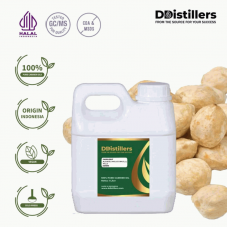
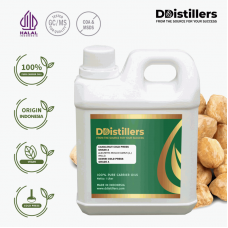
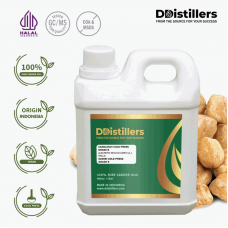
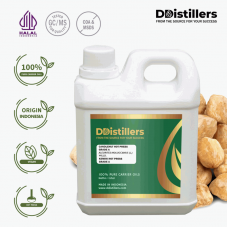
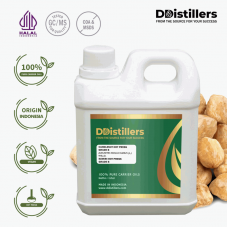
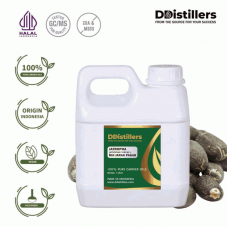
CANDLENUT HOT PRESS GRADE A CARRIER OIL – By DDistillers
INCI Name: Aleurites moluccanus (Seed) Oil
Product Category: Single Carrier Oil — 100% Pure
Product Code: BB00412_CNS-HP-A
Barcode: –
HS Code: 15159099
CAS #: 8015-80-3
FEMA #: –
Extraction Method: Hot pressing
PRODUCT DESCRIPTION
Candlenut (Kukui Nut)
Grade A Carrier Oil is a vegetable oil extracted from premium-grade Aleurites
moluccanus seeds through a hot pressing process at approximately 80–120 °C.
This method improves oil yield and deactivates oxidative enzymes (such as
lipase and lipoxygenase), though it may reduce certain heat-sensitive bioactive
compounds.
Key Characteristics:
- Color:
Golden yellow to light brown, slightly darker than cold-pressed oil.
- Aroma:
More pronounced with roasted/nutty notes.
- Viscosity:
Low, easily absorbed by the skin.
- Oxidative Stability:
More resistant to enzymatic degradation due to heat inactivation; however,
its high iodine value still requires proper storage.
Fatty Acid Composition
(GC-MS):
- Linoleic Acid (C18:2): ± 42–58%
- α-Linolenic Acid (C18:3): ± 16–22%
- Oleic Acid (C18:1): ± 13–18%
- Palmitic Acid (C16:0): ± 5–6%
- Stearic Acid (C18:0): ± 2–3%
Bioactive Compounds:
Contains tocopherols (Vitamin E) and minor phenolic compounds with antioxidant
activity. Levels are slightly reduced compared to cold-pressed oil due to heat
degradation. Studies indicate that prolonged high-temperature heating (170 °C)
can decrease tocopherol content by up to 50%, while the shorter heating
duration of hot pressing causes milder losses.
BOTANY & MORPHOLOGY
- Scientific Name:
Aleurites moluccanus (L.) Willd.
- Family:
Euphorbiaceae
- Tree Height:
Up to 30 m with an upright trunk and spreading branches.
- Leaves:
Heart-shaped or oval in mature trees (10–20 cm long); young leaves often
have 3–7 lobes.
- Flowers:
White; male flowers ±5 mm, female flowers ±9 mm.
- Fruit:
Drupe type, ±4 cm diameter, hard shell, single seed with oil-rich
endosperm.
- Native Distribution:
Southeast Asia, Polynesia, Hawaii, and other tropical regions.
HISTORICAL &
TRADITIONAL USES
Candlenut has been used
for centuries in Southeast Asia and the Pacific. In Hawaiian culture, known as
the Kukui tree (the state tree of Hawaii), its seeds have been used for:
- Traditional lamp oil (“kukui lamps”).
- Fishing net lubricant.
- Tattoo dye and wood varnish.
- Traditional remedies for mild skin ailments.
VISIT OUR MARKETPLACE:



| Specification | |
|---|---|
| Source of Material | Source Material: Candlenut seeds grade A Origin: Indonesia |
| Cultivation | Conventionally harvested and
periodically replanted to ensure sustainability |
| Main Content | Linoleic acid, oleic acid, palmitic acidm linolenic acid |
| Organoleptik |
|
| Solubility | Soluble in cosmetic esters and oils; insoluble in water |
| Blend well | Blends well with essential oils and other carrier oils |
| Downstream product application | Cosmetics and Personal Care Formulation |
| Shelf Life | 2 years |
| Storage instructions | Storage Guidelines:
|
| Allergies and general precautions | Allergen &
Precautionary Notes:
|
Related Products